Camera Muting Practices at Video Monitoring Centers
Muted cameras reveal an alarm queue that has outpaced human capacity to review.
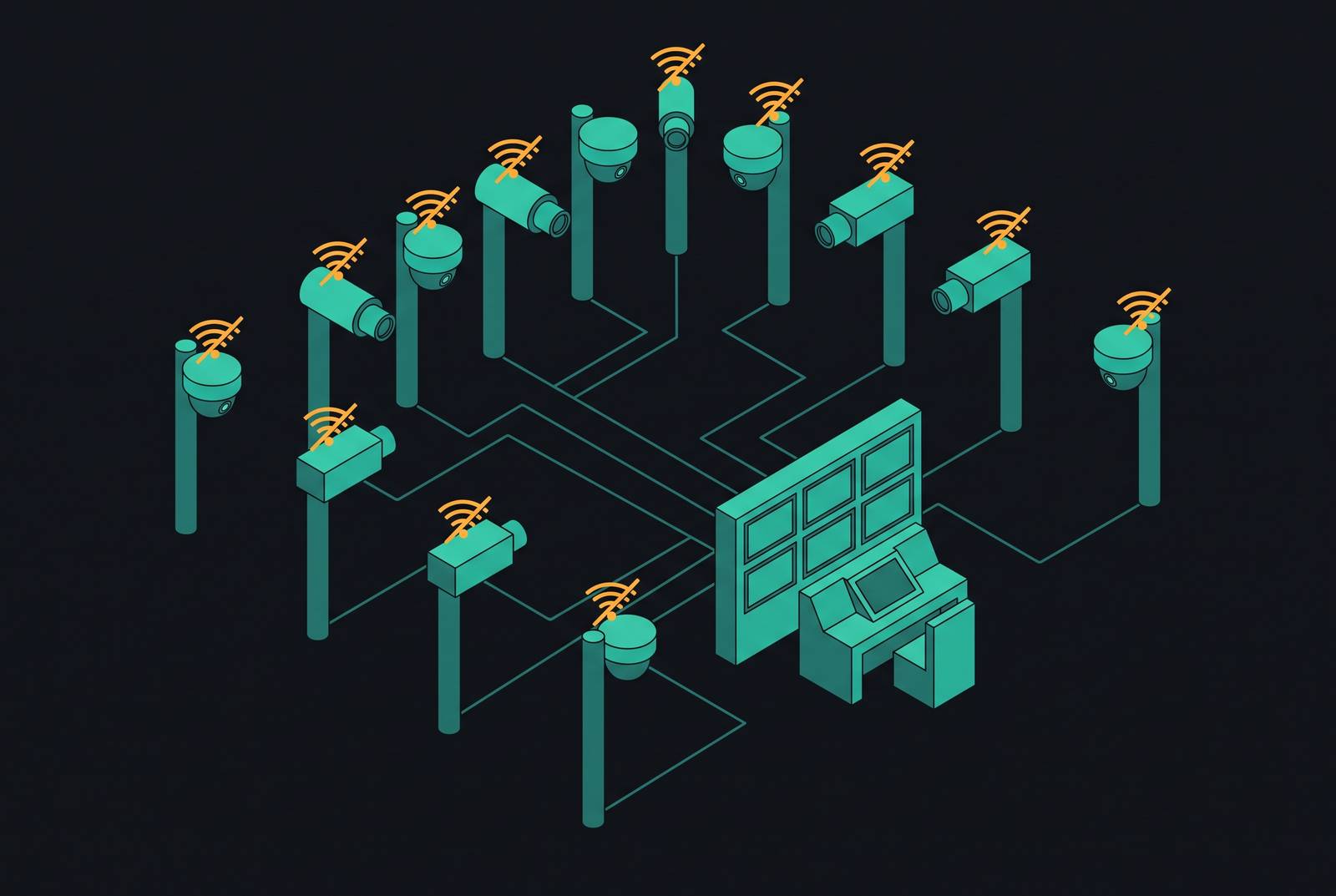
A camera that fires alerts all day eventually gets muted by the person watching it. The zone wasn't deprioritized by a manager's decision or an operator's indifference; the queue of alarms waiting for review outpaced what one person could reasonably look at. That is the behavior security buyers are describing when they say cameras "seem unwatched." Camera muting at video monitoring centers is the predictable endpoint of an alarm queue that has outgrown human capacity, not a configuration choice and not an operator failure.
The distinction matters because of what it changes about the fix. If muting is treated as a policy error, the obvious response is to demand better operator training or stricter standard operating procedures. Neither one touches the actual cause. A training program can improve how carefully an operator reviews each alert, but it cannot make an unreasonable number of alerts reviewable in the time available. Research on alarm fatigue across several monitoring environments points to the same underlying pattern: once alert volume crosses what a team can meaningfully evaluate, people start clearing alerts in bulk, muting unreliable feeds, and pushing familiar-looking signals to the bottom of the pile. It's a rational adjustment to a signal-to-noise ratio that has stopped making sense, not negligence.
Sustained alarm volume produces the same mechanism outside of security entirely: a 2026 narrative review on in-hospital alarm fatigue looked at centralized monitoring units that cover many patients at once, and found they become single points of failure, because sustained alarm volume dulls staff response, so alarms get silenced without anyone checking what triggered them. Video monitoring centers run on the same arithmetic. A camera feed that fires constantly gets muted. An alarm queue that never clears gets skimmed instead of worked. Muting is the only defense available to a person asked to give full attention to more signals than attention can cover.
Why Alarm Queues at Video Monitoring Centers Structurally Exceed Human Capacity
Legacy video monitoring detects threats in a way that guarantees alert volume will outgrow whatever headcount a company can realistically afford. The staffing math is arithmetic built into how the systems work before a single operator ever sits down at a monitor, not a miscalculation better hiring could fix.
Two things compound to produce it. First, motion-based and threshold-based triggers generate enormous alert volume because they react to any change in the frame without any sense of what that change means. A shifting shadow, a tree branch moving in the wind, a delivery truck idling near a fence, each one fires an alert that looks, on the system's terms, identical to a real intrusion. Multiplied across a site with dozens or hundreds of cameras, the queue never stops growing. False alarm rates at video monitoring centers run as high as 98% of all alarm activations. What lands in front of an operator is overwhelmingly nothing.
When monitoring demand is sustained, human visual attention breaks down, no matter how skilled or experienced the operator is. A 2026 review of telemetry monitoring in hospitals places alarm fatigue inside what it calls a complex adaptive system, where cognitive load, competing priorities, and the culture of the workplace all interact with each other. That framing explains something important: single fixes like better training consistently fail to close the gap, because the problem was never a knowledge gap. It's a capacity ceiling, and no amount of focus or seniority moves that ceiling very far.
The consequences build on each other over time rather than appearing all at once. Response to a genuine threat slows down as real alarms blend into the background noise surrounding them. Security leadership loses any reliable way to show that the cameras under contract are actually being watched in the moment that matters. Operators burn out faster under the strain, so turnover rises, and the staffing pressure that monitoring technology was supposed to relieve gets worse instead of better. A 2026 survey of alert fatigue in security operations centers lays out the downstream pattern in plain terms: under sustained low-signal alert streams, analysts start applying blanket suppression rules, triaging by severity score instead of actually investigating, and opening blind spots that a capable attacker can walk straight through. You see the same failure mode in video monitoring centers, just described from a different industry.
How Alarm Fatigue Produces "Camera Muting
Queue saturation doesn't cause one clean failure you can point to and fix. It produces a chain of small adjustments, each one reasonable on its own, that together erase coverage without anyone deciding to erase it.
The pattern tends to run in stages. First comes bulk clearing: operators start dismissing groups of alerts without reviewing each one individually, because reviewing each one individually simply isn't possible at the rate they're arriving. Research on alarm handling in industrial settings describes this precisely: alerts get cleared in batches, familiar alerts get pushed further down the queue, and the brain starts treating repeated signals that never led to consequences as background noise rather than information. Second comes feed suppression. Cameras or zones that generate more than their share of alerts get muted or quietly deprioritized, and "that camera always does that" turns into institutional knowledge that erases coverage for good, often without a formal decision behind it. Third comes severity skimming: operators judge alerts by how they look instead of investigating them, so an alert that looks low-priority but carries a real threat passes by unreviewed. Fourth comes desensitization: even an operator who is actively watching a feed shows measurably worse response quality the longer a shift runs. The 2026 telemetry review finds this exact mechanism in hospitals, where clinicians grow desensitized to alarm volume that rarely demands action, so they eventually fail to respond even when a real event occurs. Video monitoring operators face the same volume and the same pressure, and they show the same drop in response.
None of these four behaviors is a sign of a bad operator. Each one is locally rational, a person finding the only way to survive a system that is asking for more than any person can give. The gap this leaves behind is the one security buyers rarely see coming: a monthly report can show every camera online and every SLA met, while the actual hours when a threat was most likely to occur passed with no meaningful review behind the alert. The contract looks satisfied. The coverage isn't there.
Why adding operators, muting noisier feeds, or tightening SOPs cannot solve the queue problem
The conventional fixes for camera muting either shift the saturation elsewhere, or they accept permanent gaps in coverage as the cost of keeping the queue manageable.
Hiring more operators scales cost in a straight line without changing what reaches any single person's screen. If you double headcount, payroll roughly doubles, but alert volume, the false-positive rate, and the cognitive limit per operator stay exactly where they were. Turnover in high-fatigue monitoring roles erodes that investment on its own, adding to the staffing shortfall instead of resolving it.
Muting the noisiest feeds trades coverage for manageability in a way that's easy to miss. A muted camera no longer provides the protection a client is paying for, full stop as far as that camera's purpose goes. The monitoring center's queue gets easier to handle, but the client's actual exposure stays the same, or grows, if the muted feed happened to cover a high-risk zone.
Tighter SOPs and audit cycles change how operators behave without touching the volume that produces the behavior. The 2026 telemetry review found that single interventions have historically failed because the system behind them is a complex adaptive one: changing one piece, like operator protocol, while leaving the alert architecture untouched does not produce improvement that lasts.
Offshoring operators cuts labor cost while leaving the queue structure fully intact. The alert volume is the same, the false-positive rate is the same, and the cognitive ceiling per person is the same no matter where that person is sitting. What reaches the operator has to change. How hard the operator works with what reaches them was never the real variable.
What an architecture that prevents queue saturation requires
To prevent camera muting, you have to change what reaches a human operator before a queue can form, not improve how operators handle the queue once it already exists.
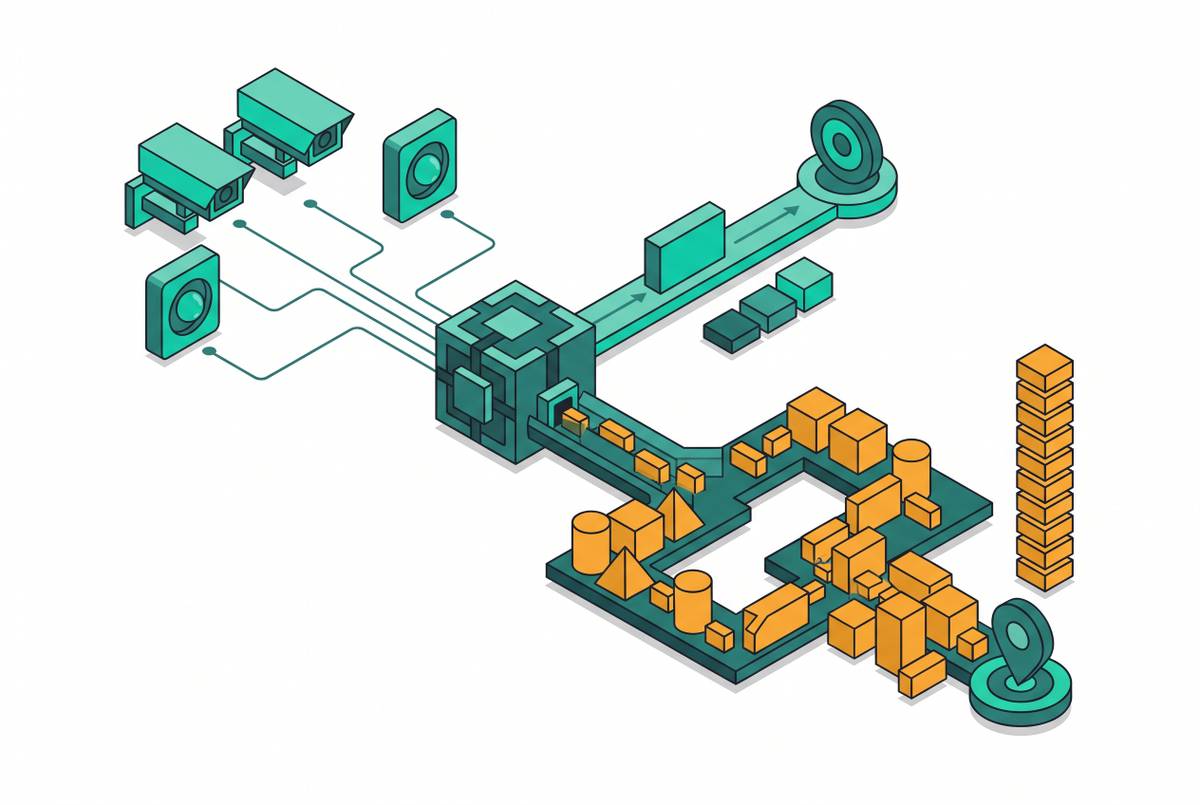
The core requirement is a filtering layer that sits ahead of the human and can reason about context beyond detecting motion or a crossed threshold. Threshold-based systems flag deviations without explaining them, so every alert turns into its own small investigation, and the operator ends up filtering what the platform was supposed to handle. Research on industrial alert systems describes this failure precisely: thresholds without context fire on any deviation regardless of what's actually happening on site, producing alerts that are technically accurate and practically useless. An effective pre-queue layer needs temporal validation: a detection has to hold across several consecutive observations rather than triggering off one frame or one signal, which removes the chattering-alarm problem that threshold systems are prone to. It also needs site-specific context. The baseline for permissible activity on a 24-hour industrial loading dock has nothing to do with the baseline for a retail back office at 2 a.m., and a system blind to that difference can't tell authorized activity from a real threat.
Inside that architecture, the human operator's job is verification and response, not filtering. When an AI system handles the filtering, operator attention gets reserved for the decisions that actually require judgment: pulling up a live feed, checking the context around it, confirming it against a site schedule, and deciding whether to step in. The 2026 survey on alert fatigue in security operations centers identifies exactly this kind of human-AI teaming as the structural answer to the problem: the AI handles noise reduction and prioritization, and the human handles the judgment call the machine can't make. That's a division of labor, not a replacement of one by the other, and it works because it respects what each side is actually good at: AI at scale, humans at judgment.
You don't end up with a smaller version of the same queue under the same pressure. It's a different operator experience altogether, where every alert that arrives has already been checked against the environment and the site's own context before a human ever sees it. If AI has already dismissed the environmental noise and the routine, authorized activity, one trained operator can cover a large camera portfolio. Coverage doesn't collapse during peak alert hours, because the filtering layer in front of the operator scales in a way human attention never could.
What buyers should audit when evaluating whether their cameras are being watched
A monitoring contract can look complete on paper, with every coverage hour accounted for and every response SLA met, while still allowing systematic camera muting to occur. Buyers need to ask about the architecture behind the service, including the hours it promises and the response times it quotes.
The first question worth putting to any monitoring center is its false-positive rate on alarms that actually reach a human operator. A center with a high false-positive rate either has no real filtering ahead of its queue, or its filtering is happening informally, through muting, rather than through anything designed on purpose. The second question asks which cameras or zones have been suppressed, muted, or deprioritized, and why. The answer shows whether coverage decisions were made deliberately and documented, or whether they're adaptations operators made under pressure that nobody above them signed off on. The third question is what site-specific context the system uses before an alarm ever reaches a person. A center that can't answer that is operating without the information it would need to tell routine activity from a genuine threat. The fourth, and maybe the most revealing, is the full elapsed time from when an alarm is generated to when a human actually reviews a verified event, counting every minute the alert spent sitting in queue, not just the time from when an operator picked it up. That full number shows whether a real threat gets seen in time to matter.
If a monitoring agreement promises fast alarm relay but delivers unverified alarms, it is measuring the wrong thing and calling it safety. Speed of signal transmission isn't the same as speed of verified response, and making the first one faster while the queue in front of human review stays untouched does nothing to shorten how long a real threat sits unaddressed. Cameras that aren't actually being watched offer a kind of false reassurance, worse than no reassurance. The questions above are what separate knowing a monitoring service exists from knowing it's actually functioning.