Every Camera You Silence to Manage Noise Is a Permanent Gap in Your Threat Picture
Silencing noisy cameras creates permanent blind spots in security coverage.
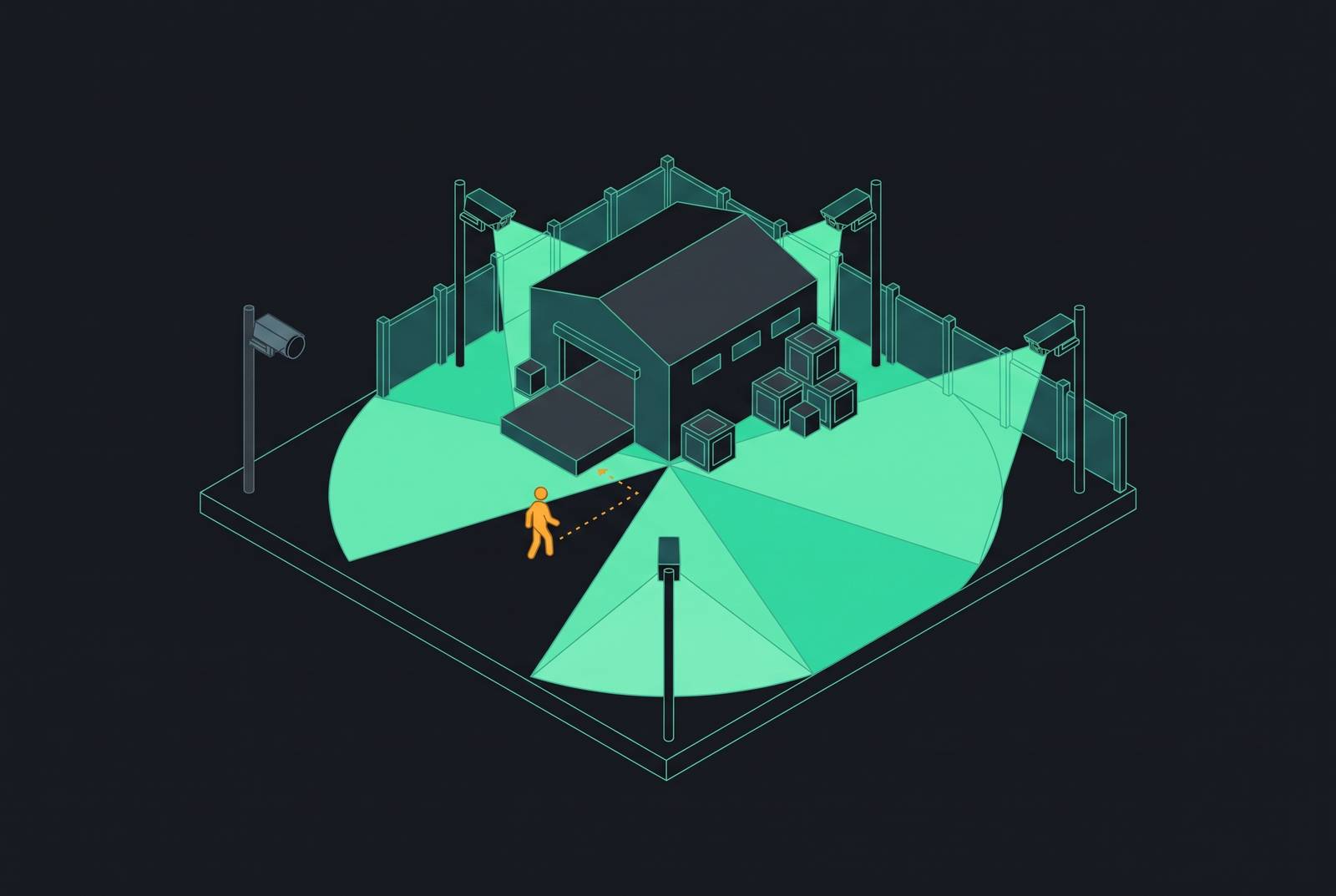
Muting noisy cameras is not a monitoring solution because it reduces alarm volume by removing physical areas from active threat detection. The camera may stay connected, but no one can respond to alarms that have been suppressed. Without an owner and a review date, that temporary workload decision becomes a permanent gap in practice. The solution is to reduce noise through alarm review that scales.
Why monitoring centers silence cameras in the first place
An operator facing dozens of feeds has to allocate attention before deciding whether any event requires action. Monitoring sends signals all the time, but people cannot pay more attention just because there are more feeds. Each new alarm has to compete for attention with events still waiting for review. A frequently triggered camera therefore creates more than an irritating distraction. It consumes the same limited attention needed to recognize a genuine threat elsewhere.
Silencing that camera is a rational response to the workload imposed by the system. VideoraIQ identifies the adaptation behind it, explaining that when most alerts are noise, operators learn to treat all alerts with less urgency. Repeated false alarms weaken the distinction between a notification and a reason to act. The operator still has to make that distinction. But the workflow asks operators to keep concentrating while showing them again and again how little useful information they get from that effort.
Human vigilance cannot sustain that demand without deterioration. The vigilance decrement typically sets in after around 20 to 30 minutes of continuous monitoring. A peer-reviewed study published in Applied Ergonomics found that 42 trained video monitoring operators detected only roughly half of target behaviors during a 90-minute task. These were professionals. Their performance illustrates a constraint that experience alone does not remove.
Under those conditions, a camera that fires frequently and falsely becomes a candidate for suppression because its workload appears disproportionate to its value. The immediate benefit is visible in the queue. The cost is less visible because it concerns the next event in that camera’s field of view. The architectural failure precedes the operator’s decision.
How a high false-alarm rate turns silencing into standard operating procedure
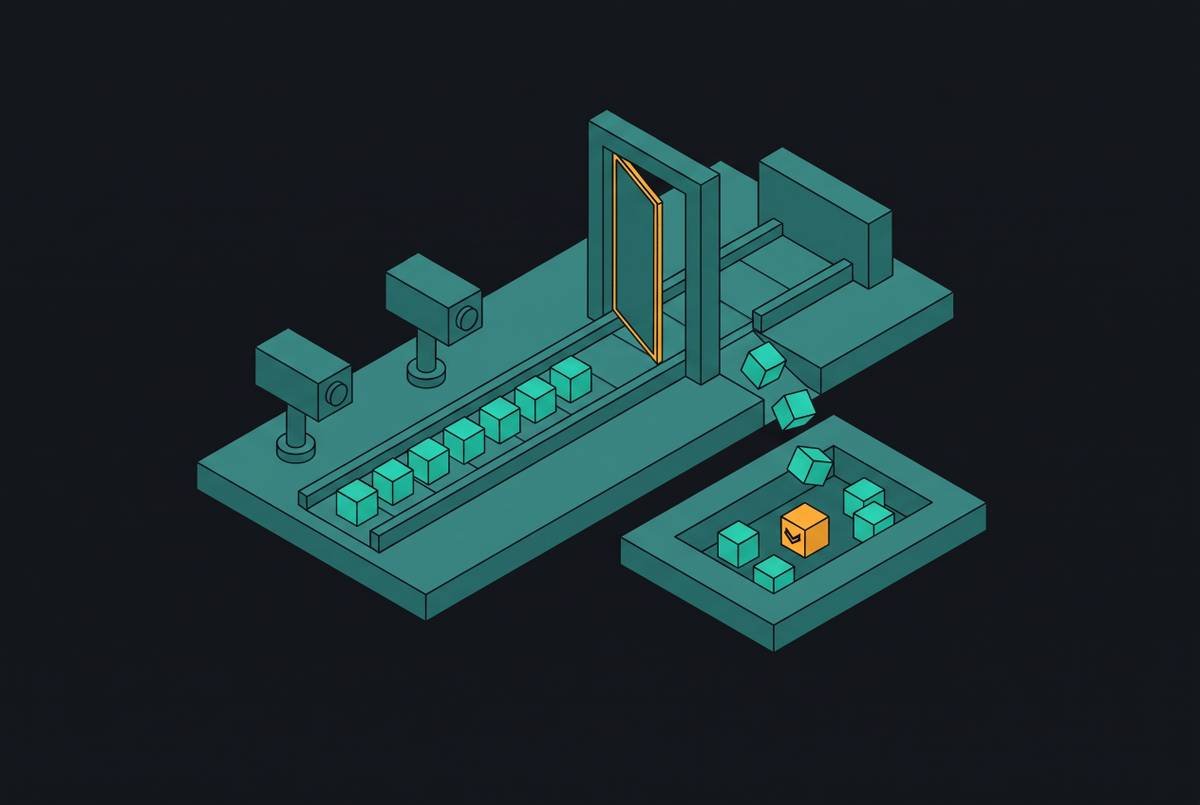
When 94 to 98 percent of alarms are false, noise is the work’s dominant input. Reviewing every alarm manually means devoting most available attention to events that do not require intervention. Suppression then moves from an exceptional workaround to a repeatable means of keeping the queue manageable. The alternative is a queue that never clears.
Totem Americas identifies false alarms as a source of operator strain and explains why video events compound the burden. An operator must watch the footage, look for patterns, check what is visible, and decide whether to escalate. Those steps call for judgment even when the operator decides there is no need to act. A false alarm is therefore not costless simply because it ends without dispatch. It has already consumed review capacity.
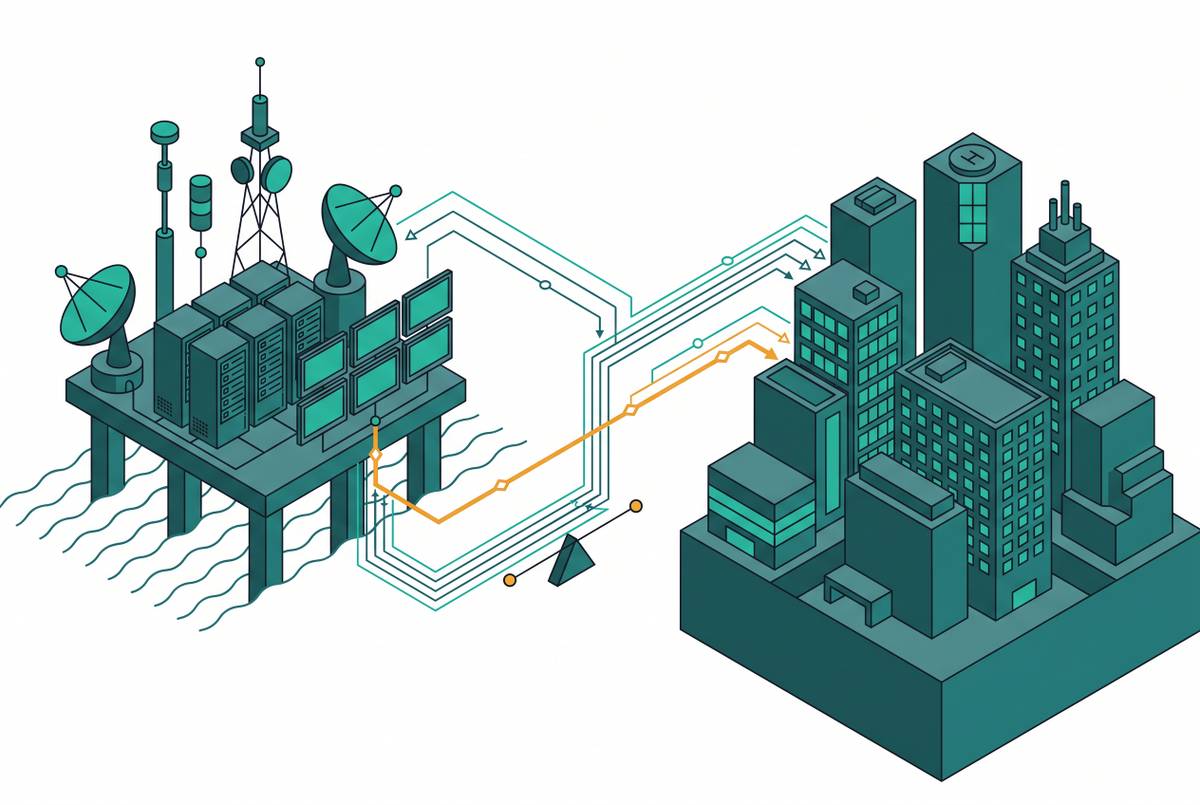
Management responses follow the same local logic as the operator’s decision. Raising thresholds reduces the number of events admitted to the queue, muting a noisy camera removes its contribution, and routing alarms offshore distributes the workload. Each response can make the immediate operation easier to manage. On its own, none of these steps turns the noise from the camera into a verified signal. When suppression remains part of that response, an area disappears from active coverage while the center appears to regain control.
Bold Group identifies unclear priorities as a further amplifier when false alarms, routine signals, and genuine life-safety events receive the same queue weight. Operators spend their judgment deciding what deserves attention rather than responding to events already established as significant. With the queue set up this way, fewer alarms can look like progress even when useful signals have been left out. VideoraIQ distinguishes the resulting failure plainly. Raising thresholds or muting cameras can convert false positives into false negatives.
What happens to security coverage when a camera is silenced?
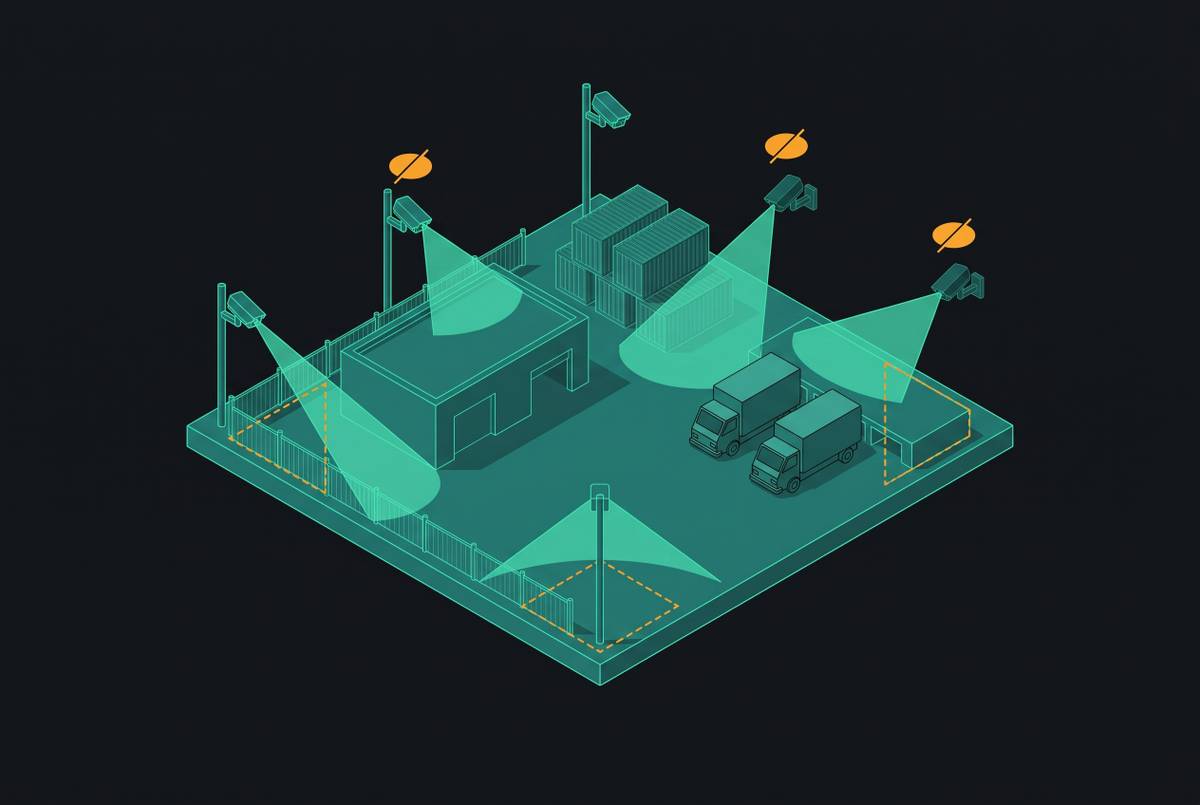
A silenced camera removes a defined physical space from active threat detection for as long as its alarm logic remains suppressed. Activity in that space does not stop. The monitoring system has stopped presenting it for action. If the camera is not being watched and no alert will fire, a threat in its view does not enter the response workflow. The monitoring center’s response clock never starts.
That is different from a delayed alarm. A delayed alarm has at least reached a process that may eventually produce a response, while a suppressed alarm provides no such starting point. Yet the dashboard can still show the camera as installed and connected. A camera count therefore describes installed capacity.
The gap also lacks a natural route back into view. Operators who cycle through a site every several months may not know which cameras were silenced under a previous shift’s workload. Without a review date or an owner, the suppression decision persists by default. Fewer alarms alone will not bring notifications back. The removal is permanent in practice because nothing in the workflow requires anyone to reconsider it.
The exposure is particularly clear in loading docks, truck yards, employee lots, and after-hours retail floors. These are spaces where motivated actors look for coverage gaps, and a sufficiently patient observer can locate a silenced perimeter camera’s blind spot. The consequence is not confined to operations. VideoraIQ documents how false negatives become compliance gaps and audit findings, giving suppression legal and contractual dimensions. It also warns that adding cameras without improving alert quality accelerates the fatigue that degrades coverage, making camera count an increasingly misleading measure of protection.
Why the conventional fixes leave the gap in place
Adding operators increases the amount of work a center can absorb, but it does not improve the signal-to-noise ratio. The same cameras still generate the same kind of review burden. Bold Group describes additional staffing in a fragmented, unprioritized, manual workflow as more capacity to absorb strain. Hiring can relieve pressure without removing its source. It also provides no inherent reason to revisit cameras already silenced.
Offshoring changes the cost and distribution of that work. Totem Americas positions offshore staffing as a workload distribution tool. Moving an alarm to a different operator does not reduce its volume or improve its quality. Nor does routing work elsewhere reverse an existing suppression decision.
Fragmented tooling makes both approaches less effective than their staffing numbers suggest. Bold Group describes operators as the integration layer between video, access control, environmental sensors, and a legacy panel, each on a separate interface. More operators can share that burden, but each review still requires manual assembly of context. Raising thresholds reduces workload by keeping some alarms from reaching attention, with the false-negative risk already described.
Staffing alone cannot overcome the psychological limit on continuous monitoring. The operative change has to concern what reaches the operator. Even after peak volume subsides, suppressed cameras stay silent where no feedback mechanism audits them and restores active coverage.
What an architecture that doesn't create the gap looks like
The foundational requirement is review of every alarm from every camera at a rate that matches signal generation. That capacity cannot depend on operator headcount alone. A scalable review layer must take on the work of screening alarms so that humans receive verified threats. This preserves human judgment for response. It also takes away the workload that makes silencing a camera seem necessary.
AI analytics can distinguish a person from an animal and an authorized vehicle following its usual route from someone loitering near a restricted entrance. With advances in vision-language models, that assessment can use context that goes beyond pixel-change detection. The Ndichu et al. survey, an arXiv preprint submitted to ACM Computing Surveys in May 2026, organizes AI-driven alert screening across SOC environments into filtering, triage, correlation, and generative augmentation. That framework separates the work required to make an alert useful. It is not, by itself, evidence that any particular physical monitoring deployment meets the requirement to review every alarm.
At the detection layer, precision depends on defining the event that warrants attention. VideoraIQ describes virtual tripwires and zone-specific intrusion detection that trigger on defined boundary crossings. The distinction is operationally specific. Being near a boundary and crossing it are not the same event, so they should not automatically produce the same demand on an operator. A relevant, immediately verifiable alert gives the operator a firmer basis for judgment.
Those definitions must reflect the site. A loading dock has a different behavioral baseline from a lobby, and classification needs the schedules and authorized activity that make those differences intelligible. A generic template leaves the conditions that produced excessive false alarms unresolved. Class filters, dwell rules, zone masks, and operator feedback can cut surveillance false alarms by 70 to 90 percent in an AI-first monitoring layer. The architectural purpose of that reduction is to keep cameras active while escalating verified threats to trained operators.
A genuine threat reaching an operator quickly is a different outcome from the same threat waiting behind unreviewed alarms. The monitoring SLA must therefore track the time from alarm receipt to verified escalation as well as the time from dispatch to arrival. Otherwise, the time spent screening alarms is left out when the center measures how well monitoring works. Review capacity, site-specific classification, and escalation time together describe the required architecture more accurately than camera count.
What security buyers should audit before accepting a camera count as a coverage guarantee
For buyers, the practical task is to examine the decisions between an installed camera and a human response. Suppression transparency comes first. The monitoring contract should require disclosure of cameras whose alarm logic has been adjusted or suppressed, together with the schedule for reviewing those decisions. A buyer should also establish who owns the review. Without that information, the buyer cannot tell which connected cameras provide active coverage and which have had their alarms suppressed.
The next question concerns admission to review. Does the workflow process every alarm before it reaches an operator, or do threshold adjustments, priority queuing, and offshore routing determine which alarms receive review at all? A system that reviews an alarm and finds no threat has performed a different function from one that prevents the alarm from receiving review. The buyer needs to know which mechanism reduces the reported workload.
Bold Group proposes judging how much an operator must do to make sense of an alarm. When an operator has to piece together context from disconnected interfaces, the platform still puts strain on them however it is staffed. Buyers should also ask whether AI classification is configured for each location’s schedules, authorized activity, and behavioral baseline. Site-specific protocols are the basis for deciding whether an event is unusual.
The SLA should then expose the time between alarm receipt and verified escalation. The distinction between dispatch-to-arrival time and the time a genuine threat waits for recognition belongs in the vendor conversation before camera count is accepted as evidence of coverage. The final test is concrete. If every camera on the site generated an alarm simultaneously right now, would every one of those alarms receive review before a human operator determined whether to escalate? An architecture that cannot answer yes has left some cameras available to be silenced.