Security Coverage Voids Left Behind When High-Alert Cameras Are Silenced
Silencing noisy cameras creates blind spots that persist even when footage keeps recording.
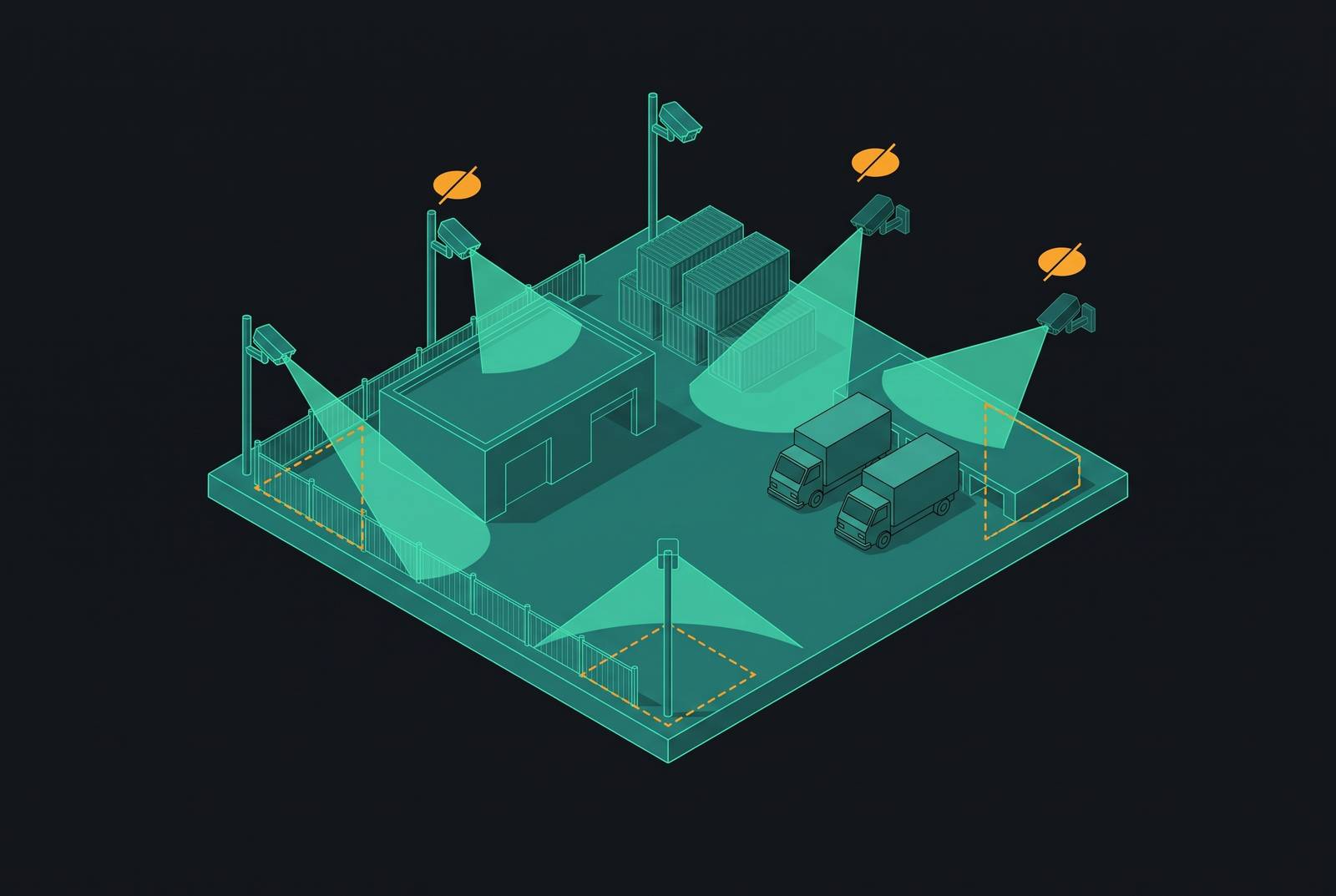
Muting noisy cameras is not a monitoring solution because it removes alerts without removing the risk at the location being watched. It leaves a defined coverage void even when the camera remains online and recording. Closing that void requires contextual filtering before human review and a response workflow that can act on verified threats without recreating the queue pressure that caused suppression.
Why muting noisy cameras is not a monitoring solution
For an operator who keeps getting alerts from wind, shadows, or authorized activity, silencing a camera feels like a way to cut the noise. Its output has become difficult to distinguish from useful warnings, and reviewing it consumes time needed elsewhere. The queue loses a source of interruptions while the camera’s assigned zone loses active oversight.
That decision changes geographic coverage through an interface adjustment. A delivery entrance, perimeter segment, or gate remains physically accessible after its notifications stop reaching an operator. The camera may keep recording. Recording can save footage, while active monitoring helps people act on what they see. A camera can therefore remain technically functional while the area it watches is effectively dark to the monitoring operation.
The ASU Center for Problem-Oriented Policing research finds that the overwhelming majority of police responses to alarm activations are false. That finding describes the burden at the response end of the reactive model, where an activation requires attention before its significance is established. Operators inherit that same basic problem when unclassified detections enter their queue. Silencing the source removes the burden from the operator while leaving the site exposed.
How queue pressure turns individual silencing decisions into a systemic default
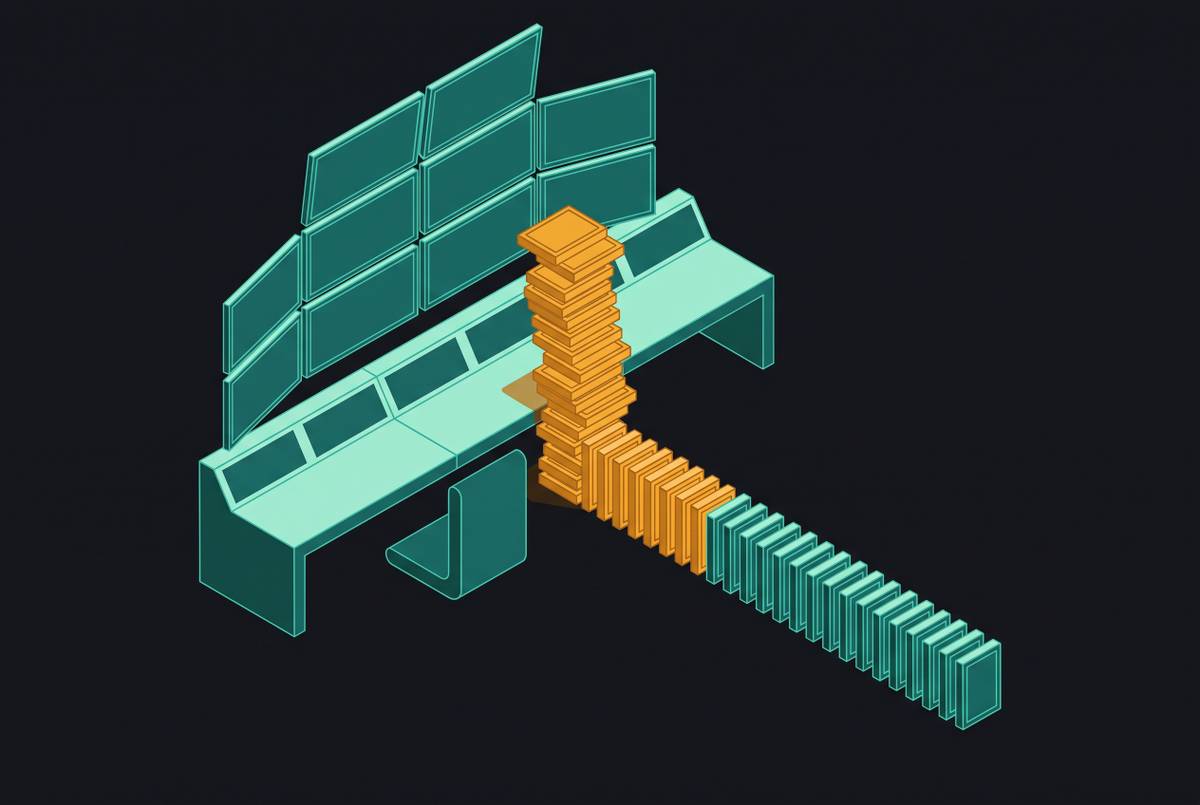
A monitoring center under persistent queue pressure produces more than occasional workarounds. It makes suppression a repeatable way to keep work moving. Traditional operators manage many screens simultaneously under the “Wall of Glass” model, while incoming signals continue regardless of the attention available to review them. Human triage capacity is bounded by headcount. Detection volume is not tied to that limit.
The queue grows whenever alarms come in faster than operators can deal with them. Every new batch then competes with unfinished work, including events that may require immediate intervention. Escalation does not create additional review capacity. Even if operators never deliberately mute a camera, alarms left unreviewed are functionally suppressed during the period when a response could help.
Under those conditions, operators learn which sources reliably consume time without producing actionable events. They may route around those cameras informally before the practice becomes settled. The camera remains visible on the dashboard. Its feed can still record, yet its alerts have effectively exited the active monitoring workflow. What appears to be a functioning camera estate can conceal a shrinking set of locations receiving meaningful attention.
Adding operators can increase available triage capacity, but it does not change what enters the queue. Raw detections still require human interpretation, and another increase in volume can recreate the mismatch. Event-driven monitoring changes this by separating noise from threats before people review them. That changes the work operators receive rather than asking them to absorb more of the same work.
What a coverage void actually looks like on the ground
At a commercial property, a silenced exterior camera can leave a loading dock or delivery entrance unverified after hours. That entrance remains a natural ingress point during the highest-risk window for theft. The gap has a physical address. It is the approach, doorway, or dock area assigned to the suppressed camera.
The void also has a duration and a visibility problem. It lasts for every hour of suppression, including peak-risk periods when the queue may be at its busiest. Yet the camera can still appear active, and the site can still appear covered. There may be no alarm to warn that oversight has stopped. A status view that shows working equipment therefore does not, by itself, show whether someone will review activity at the delivery entrance.
Other site types expose different consequences of the same withdrawal. At a multifamily property, a suppressed perimeter camera leaves an unmonitored approach to amenity areas or parking structures that can serve as staging grounds. At a truck yard, a muted gate camera removes oversight of vehicle movement, a primary indicator of after-hours intrusion. An industrial equipment lot has the same vulnerability. Activity can now occur in that particular place without reaching the monitoring workflow.
Routine suppression makes the gap more exploitable because its timing becomes predictable. A bad actor scouting a property can encounter a consistent window of reduced oversight. Fragmented infrastructure can produce the same coverage consequence without a deliberate mute. A failed communicator at a distribution center, or a camera left offline while a service ticket queues, also leaves a defined zone dark while the site appears monitored.
Why the void compounds rather than stays fixed
Suppression changes how operators treat the camera over time. Once its alerts acquire a reputation for noise, the threshold for reviewing them rises, and the camera can leave the active workflow without a formal decision. The gap becomes easier to overlook. Because the feed still exists, its reduced role in monitoring may remain less visible than an outright equipment failure.
Adjacent cameras can then take on informal responsibility for watching the silenced zone. That transfer increases the alert load those cameras are expected to support, creating suppression pressure around them as well. The original workaround spreads its burden outward. If the neighboring sources also become too costly to review, the void widens beyond the first camera’s field of view.
Time extends the gap as geography expands it. Suppression that began as an after-hours response to peak alarm volume can become part of shift handoffs and standard operating procedure. Reduced coverage then outlasts the condition that first prompted it. A temporary exception becomes an operating assumption, with no distinct moment at which the wider withdrawal is acknowledged.
Noonlight’s 2026 emergency response report identifies a related feedback loop in which rising alert volume forces users to filter events themselves, producing alarm fatigue and eroding trust. Some users disengage further as confidence falls. That loss of trust reinforces the learned habit of avoiding noisy sources. Deferring the problem therefore allows the gap to keep changing while it awaits repair.
What site-specific context actually does to the suppression incentive
Site-specific context changes the operator’s incentive by changing the meaning of the incoming signal. A detection can be accurate without identifying a threat. A delivery truck at 6 AM, an employee using a side door, or wind-driven debris crossing a perimeter line may all trigger legitimate detections. The missing element is interpretation. Without schedules and authorized-activity information, the monitoring system passes that burden to the operator each time.
Context lets the system classify those detections before people have to do the same work over and over. Schedules, authorized access windows, known vehicle types, and shift patterns distinguish expected activity from a departure that warrants attention. Motion at a gate is no longer evaluated in isolation. Its significance depends on when it occurred and whether the entity was authorized to be there. Operators have less reason to silence a source when its output already reflects those distinctions.
The same report identifies filtering alerts, learning routines, and detecting abnormal behavior as a key AI-driven trend in modern security. Those functions depend on a usable definition of normal. Per-scene, per-hour calibration gives each camera a baseline for that time window, so the system can interpret what it sees at each place and hour. Activity at 3 AM in a shuttered office calls for a different classification from activity at 3 AM in a continuously operating distribution center.
Construction sites show why that baseline cannot be detached from site operations. Project phases shift, and detection rules must adapt with them. A concrete truck at 5 AM during a scheduled pour is expected activity despite the early hour. Without that context, the system either floods operators with false positives or suppresses alerts that they need to review. Context breaks that choice by allowing interpretation to change with the work underway.
How AI agents close the gap between detection and verified threat without adding to the operator queue
The report frames the emerging hybrid model as complementary layers, with automation providing scale and speed while humans provide judgment, trust, and real-world outcomes. The division of work is central. AI agents perform the repetitive filtering before human review, while operators validate escalated threats, coordinate response, and retain authority over dispatch decisions. Automation is not simply another source of alerts added to an already crowded workflow.
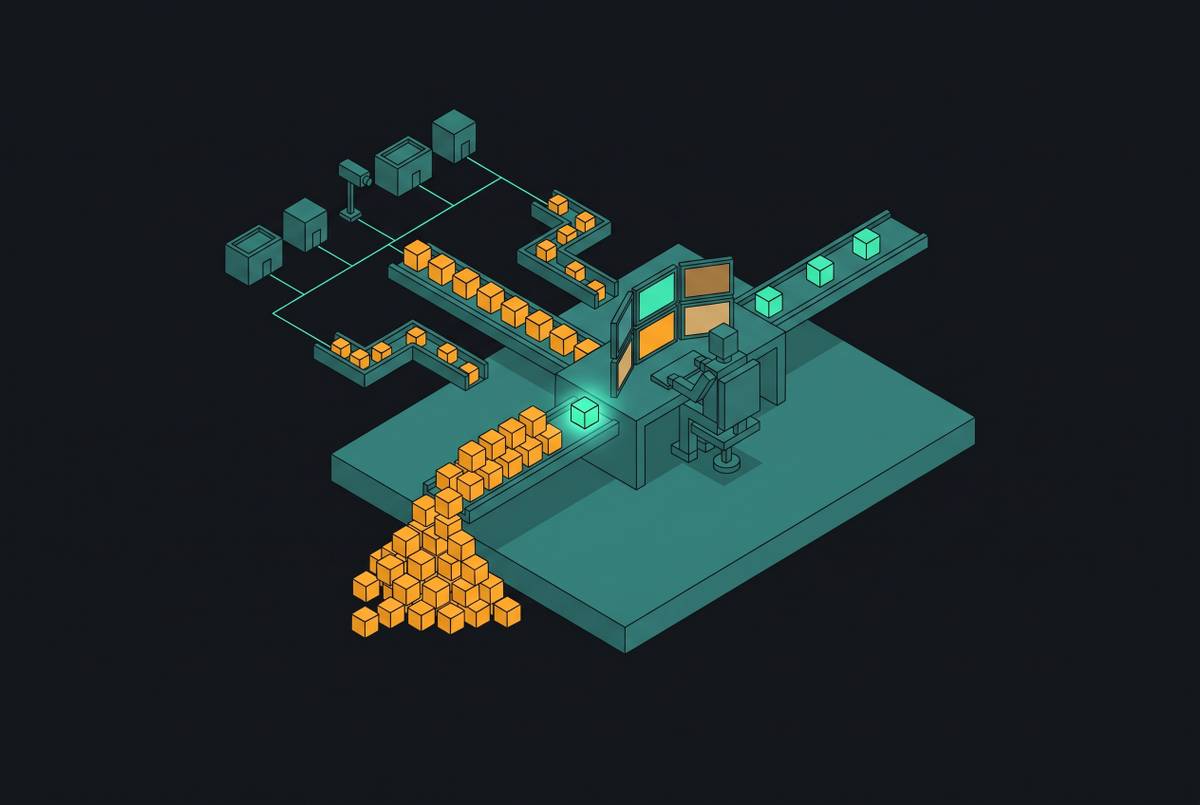
In this arrangement, an agent reviews an alarm, watches the clip, compares the event with site context, and produces a classification. The agent can classify an event as a confirmed threat, authorized activity, or environmental noise. The agent’s role is explicitly pre-human. It dismisses expected activity and environmental triggers so that only contextualized threats reach the operator queue. The repetitive work that previously encouraged suppression no longer reaches the operator in the same form.
People can focus on events that need judgment and action without having to check over and over that ordinary site activity is ordinary. The source can remain under active review without requiring an operator to process its full detection volume. The queue is narrowed before it consumes human capacity.
The interval between detection and verified escalation is a window a threat can exploit, so filtering must compress that interval. Verified escalation in under 90 seconds provides a concrete benchmark for the restored workflow. It connects signal interpretation to the time available for intervention.
AI filtering also gives people reason to worry that it might dismiss an event by mistake. Human authority over dispatch does not make automated classification infallible, and the hybrid model should not be understood as such a guarantee. It defines responsibility instead. The agent narrows the queue to events warranting review, while humans make response decisions that require judgment beyond automated classification alone.
What it actually takes to close a coverage void once it has formed
For security teams assessing an existing void, the first requirement is honest mapping. That means identifying which cameras have been suppressed, the periods affected, and the zones those cameras were responsible for watching. Equipment status alone cannot answer those questions. Informal suppression often leaves no audit trail, so a camera inventory may show what is installed without showing where active oversight has stopped.
The second requirement is to make restored output trustworthy before returning it to the human queue. Site schedules, authorized activity, and access windows must inform classification so that the camera converts raw motion detections into interpreted events. Unmuting alone restores the original workload. If the queue remains unfiltered, the same pressure that made suppression rational can push the camera out of service again.
The third requirement is a response architecture that can turn verified detection into timely intervention. A camera that is actively watched and produces verified escalations in under 90 seconds closes the monitoring gap in a way that an online feed behind a 20-plus-minute backlog does not. Otherwise, the location has regained signal production without regaining an effective response.
For buyers, the assessment therefore rests on named criteria, including suppression visibility, site-specific classification, and verified escalation time. Those criteria link the zone assigned to a camera to an operator who can act, and keep uptime alone from being taken as proof of coverage. Camera count is not an adequate substitute. A site with fewer cameras and a verified, fast-response monitoring architecture can have more effective coverage than a larger installation whose monitoring workflow routinely silences the places it is meant to protect.