Offshore Monitoring Center Tradeoffs for Commercial Properties
Offshore monitors cut labor costs but leave alarm queues and response delays unchanged.
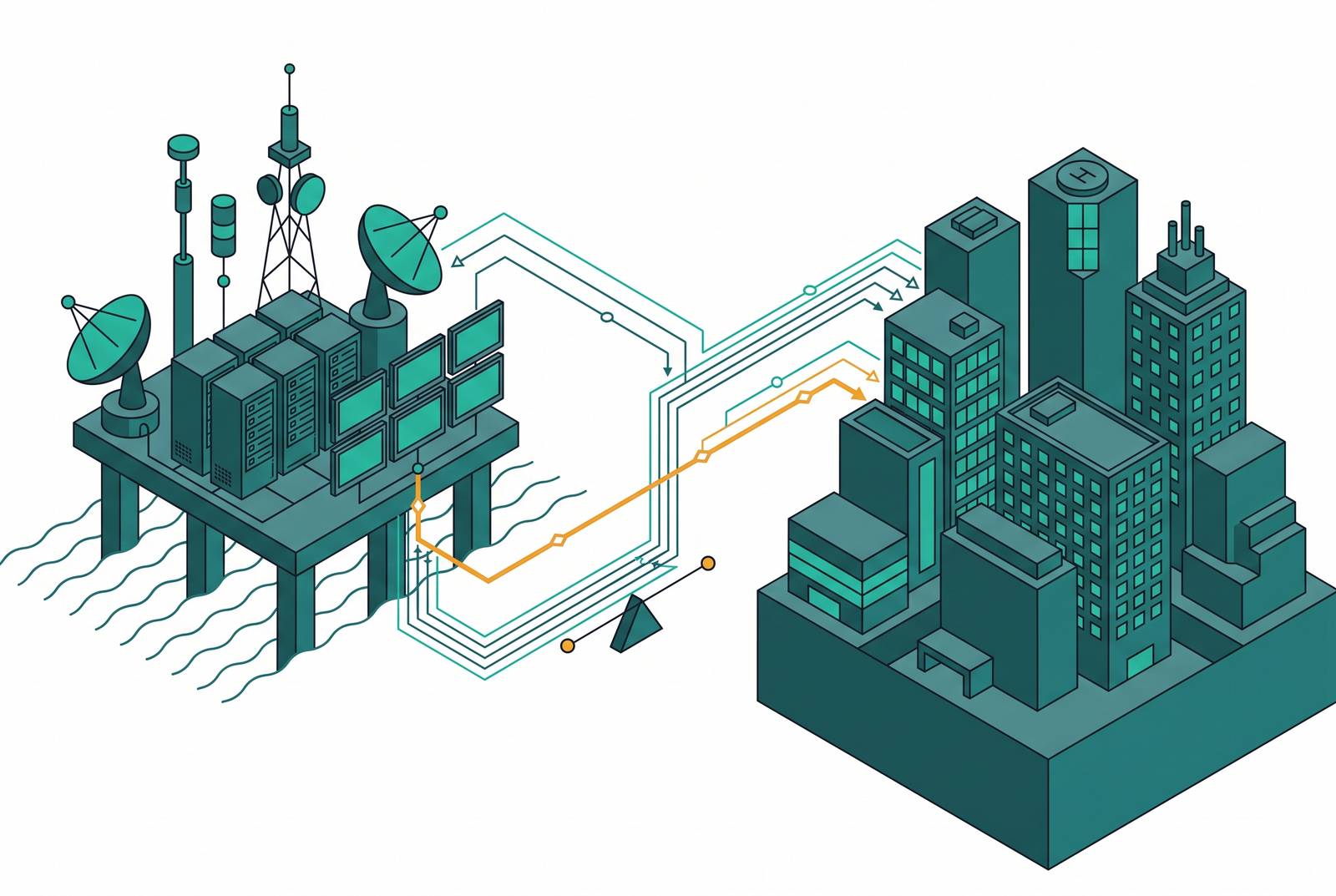
Monitoring is labor-intensive by design. When an alarm signal reaches a monitoring center, a human being has to acknowledge it, review the footage or sensor data behind it, and decide what happens next. That loop, repeated thousands of times a day across a portfolio of commercial properties, is where the cost of monitoring actually lives. Offshore labor markets let operators run that same loop for a fraction of the domestic wage, so offshoring is a direct and fairly obvious way to cut the largest recurring expense in the monitoring budget.
Round-the-clock coverage compounds that math. If a domestic monitoring center covers a commercial property 24 hours a day, it needs staff across multiple shifts, including nights and weekends, when wage premiums tend to be highest. Offshoring compresses that wage exposure, and the property owner doesn't have to change anything about the system already installed. The cameras stay where they are. The sensors stay configured the way they were configured. The alarm signals route the same way they always have.
That's what makes the decision so easy to justify on paper. The contract a commercial buyer signs after moving to an offshore provider looks, on its face, identical to the one they had before: same cameras, same signals, same service-level language. Nothing about the visible infrastructure changes, so the switch reads as a pure efficiency gain, a way to pay less for the same thing. What that framing leaves out is whether the thing being paid for was ever defined narrowly enough to survive the move. Monitoring is a coverage commitment, not just a labor cost to be minimized, and coverage depends on more than how cheaply a human can sit in front of a screen.
The queue problem that cheaper labor does not touch
Offshoring changes what an operator costs per hour. It does nothing to change how many alarms that operator has to process in a shift, and that second number is where commercial monitoring actually succeeds or fails. Every monitoring center, regardless of where its operators sit, processes alarms as a queue. Signals arrive, and a human has to review each one, even if that review takes only a few seconds. When the volume of incoming alarms is high, a genuine threat event doesn't get reviewed immediately just because it's genuine. It waits in line behind whatever arrived first, and a cheaper operator working through that same line does not make the wait shorter.
False alarms are the dominant driver of that volume, and they carry consequences that have nothing to do with where the monitoring center is located: eroded customer confidence, wasted emergency dispatch resources, and municipal fines that accumulate the more often a center cries wolf. None of that is solved by changing the operator's hourly wage. The volume producing those consequences is a property of the alarm stream itself, not of who's watching it.
Sustained exposure to that volume produces a well-documented behavioral pattern. Operators who review alert after alert that turns out to be a shadow, a gust of wind, or a stray cat start to treat the monitoring feed as fundamentally unreliable, and they begin muting or ignoring alerts as a matter of habit. It's what happens to any human monitoring any high-noise feed over time, a pattern specific to no workforce, and offshoring an already-noisy alarm stream does nothing to interrupt it. The operator on the other end of that feed, wherever they sit, inherits the same fatigue.
A natural objection follows: if operators are cheaper offshore, a buyer can simply staff more of them and spread the queue across more hands. That response treats the problem as one of headcount, which only partly holds. Adding operators reduces how deep each individual queue runs, but it does nothing to change the ratio of real signals to false ones arriving. The inefficiency is structural and resurfaces the moment alarm volume spikes. A fixed-headcount monitoring center has a throughput ceiling built into its staffing model, whether it's domestic or offshore. An architecture that filters alarms before they ever reach a human queue does not carry that same ceiling, because the constraint it's working against isn't headcount.
What commercial buyers are trading away when they offshore
The backlog of unverified alarms translates into specific, recognizable losses once it's applied to how a commercial property is actually monitored day to day. None of what follows is a criticism of any particular workforce or geography. Each tradeoff is a structural consequence of how monitoring centers, offshore or domestic, operate under volume.
Response speed is the most direct casualty. The time between a real event occurring on camera and a verified human response reaching the right person is determined by where that alarm sits in the queue, not by the operator's location. A genuine intrusion can sit unreviewed while a string of motion-triggered false alarms clears ahead of it, just because they arrived first. Moving the center overseas changes the cost structure behind the queue. It does not change the queue's position-based logic.
Site-specific context matters just as much, and it's harder to preserve across distance. Effective alarm verification depends on an operator knowing what's normal at a given property: which personnel are authorized to be on-site after hours, when deliveries typically arrive, what the usual after-hours access pattern looks like for that specific lot or warehouse. That knowledge has to be built and maintained for every client a center serves, and a geographically remote operation managing a large, diverse client base has a harder time encoding and transferring that context than a center with tighter, more direct ties to each site.
Communication friction appears most in incidents that call for live voice response: a verbal warning broadcast over an on-site speaker, a phone call to a property manager, coordination with local police dispatch. Language gaps and time-zone handoffs can add seconds or minutes to exactly the moments when speed decides whether an incident is deterred or completed.
Protocol depth rounds out the list. Commercial sites increasingly run multi-channel monitoring setups that pull access control, video, environmental sensors, and dispatch workflows into one response chain. Operating that chain correctly requires operators trained specifically on a given site's configuration, and the high turnover common in many offshore labor markets means that training has to be rebuilt more often than it can be reliably maintained. Configuration knowledge that takes weeks to build can be gone within months if the operator who held it has moved on.
How SLA language masks the gap between acknowledged and resolved
Most commercial monitoring contracts measure response in terms of acknowledgment, the moment an alarm is marked as received by an operator. Acknowledgment takes seconds, and it satisfies the service-level clock regardless of what the operator does after that. An alarm can sit reviewed but unverified, with no dispatch and no intervention, for a substantial window after the SLA has technically already been met. The service provider hits its number. The property remains exposed.
The number that actually matters to a commercial property owner is time-to-verified-response: the interval between a genuine threat appearing on camera and a trained person confirming that threat and initiating a protocol, whether that's a dispatch call, a live voice warning, or a notification to on-site personnel. Standard service-level agreements rarely commit to that end-to-end figure. They commit to the easy part, acknowledgment, and leave the hard part, verification and action, undefined.
That gap has direct financial consequences for the property types where after-hours theft is the primary risk: retail storefronts, truck yards, employee parking lots. In those environments, a threat that gets acknowledged but not verified and acted on within a tight window is functionally the same as a threat that was never monitored. The camera recorded the event. The alarm fired on schedule. The SLA was met by the letter of the contract. The loss happened anyway, because nothing in the contract actually measured the interval that determined whether the loss could be stopped.
Buyers evaluating a monitoring vendor need to ask a different question than the one most contracts answer by default. Instead of asking what the acknowledgment target is, ask what the average interval is from a first-frame triggering event to a verified human decision, and what proportion of incoming alarms ever receive that decision. A vendor that can answer both parts of that question in specific terms is measuring the thing that actually determines coverage. A vendor that can only answer the acknowledgment half is quoting a number that was never designed to capture whether a threat was actually caught.
Why false-alarm volume is the variable offshore contracts leave unmanaged
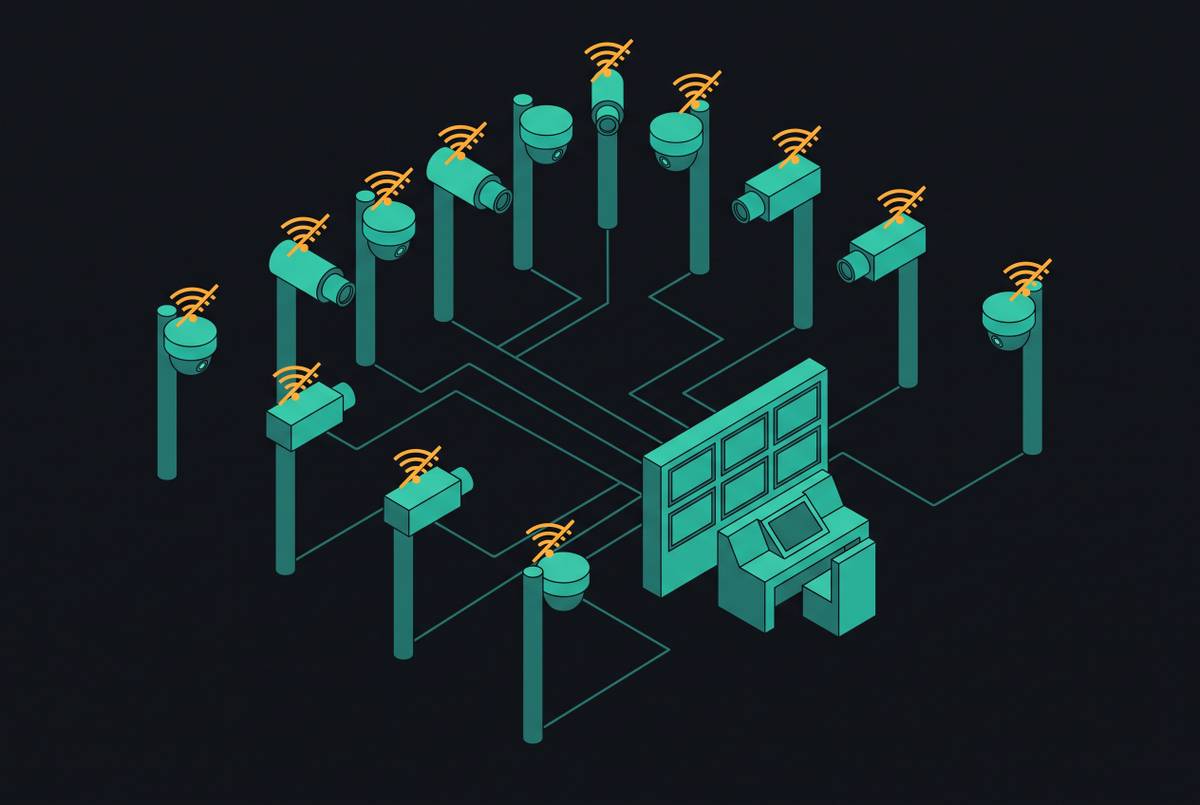
False alarms function as a persistent epidemic across the monitoring industry, and the consequences don't stay contained to a single incident. Emergency resources get consumed responding to signals that turn out to be nothing. Municipal fines accumulate for properties that trigger repeated false dispatches. Operators get worn down by volume and develop alarm fatigue. They start treating every new alert as probably false before they've even looked at it.
That fatigue is a rational adaptation to a high-noise signal environment: an operator who has reviewed thousands of alerts triggered by wind, shadows, or passing traffic learns, through repetition, to discount new alerts before investigating them properly. The adaptation makes sense given the input. The input is the problem.
Legacy camera systems generate that input through pixel-based motion detection, which is the dominant underlying technology behind most commercial alarm feeds. A person standing in a restricted zone and a truck passing on a road behind the property's fence line look the same to pixel-based detection. If something crosses a pixel-change threshold, it becomes an alarm, whether or not it represents any actual risk. That's a limitation of the detection technology itself, not of the people reviewing its output.
An offshore center receiving a high-false-alarm feed from that kind of legacy system will develop the same fatigue and the same muting behavior a domestic center would, because the geography of the operator has no bearing on the quality of the signal arriving in front of them. Reducing false-alarm rate is the intervention that actually improves coverage, and that intervention has to happen upstream of the operator, at the detection layer itself. It doesn't matter who reviews the alarm, or where they sit while reviewing it: the false-alarm rate stays untouched.
What a structurally different approach looks like: filtering before the operator, not instead of one
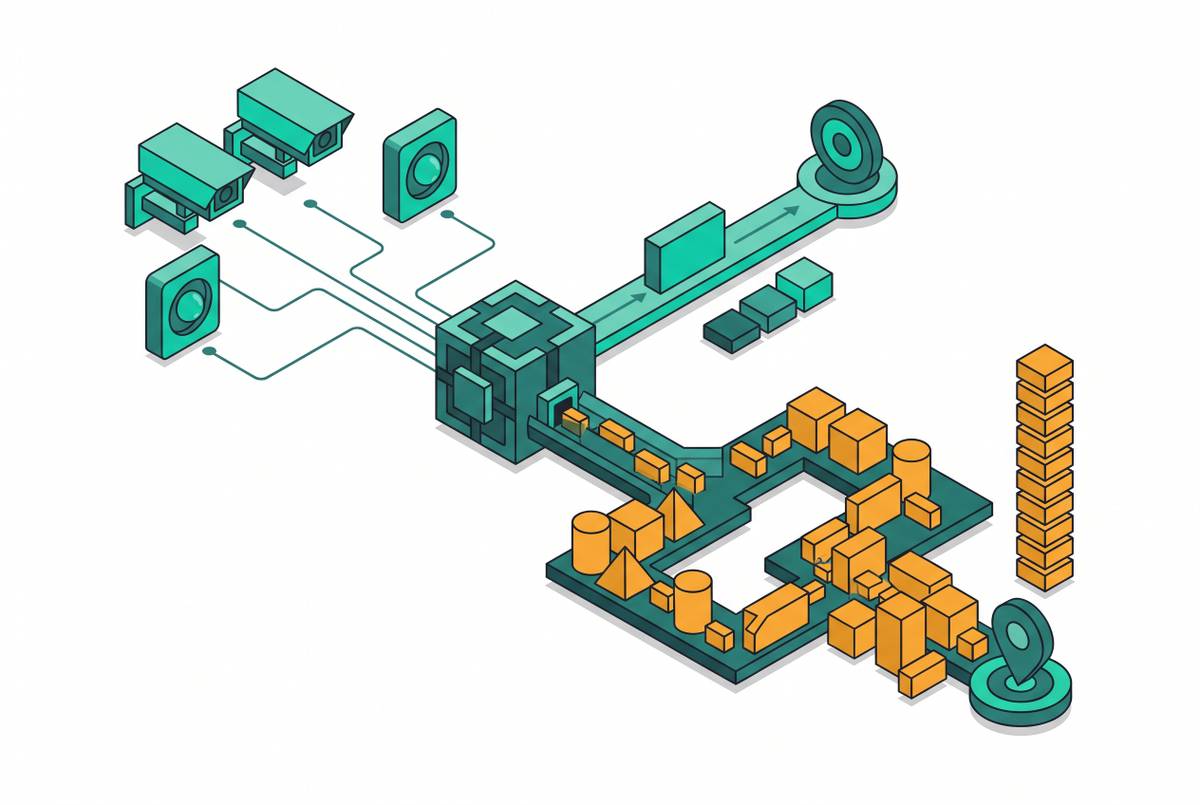
Resolving the false-alarm backlog means moving the filtering function ahead of the human operator rather than relying on the operator to filter manually after the fact. AI-augmented monitoring systems analyze incoming video and sensor data against site-specific context, scheduled access windows, authorized personnel patterns, zone-specific rules, before a human ever has to look at it. That analysis separates environmental noise from a genuine anomaly at the point of detection.
The output of that filtering looks different from a traditional alarm feed. Instead of an alert that reads "motion at camera 4," a well-built AI detection system produces something closer to "person in restricted zone after hours." That difference isn't cosmetic. A motion alert requires a human to do the work of figuring out what it means: who's in frame, whether they belong there, whether the movement matters. A characterized alert has already done that work, leaving the operator to apply judgment to the response.
This architecture doesn't remove the human operator from the loop. It changes what the operator is asked to do. Instead of manually sorting through thousands of probable false alarms in search of the handful worth escalating, a trained operator receives events that have already been verified as worth attention and spends their time deciding how to respond, not deciding whether to look closer first.
The practical effect is that response time to a genuine threat becomes a function of how quickly a verified event reaches a human, rather than a function of how long the incoming queue happens to be at that moment. That's a structural change in how the system behaves, not an incremental gain in how efficiently an existing queue gets processed. For commercial properties where the threat window is narrow, retail theft, an after-hours perimeter breach, unauthorized entry into a truck yard, the interval between a genuine event and a verified human response decides whether the monitoring system is doing its job.
What commercial property buyers should evaluate before choosing a monitoring model
For a commercial property buyer, what matters isn't whether a monitoring center is domestic or offshore. What matters is whether the monitoring architecture behind that center resolves the false-alarm backlog or simply relocates it somewhere cheaper. A handful of specific questions separate vendors who have addressed that architecture from vendors who have only addressed their labor costs.
- Ask what detection technology generates the alarms the center receives. If the answer is pixel-based motion detection, the false-alarm rate will run high no matter where the operator reviewing those alarms is located, and the backlog of unverified alarms is already built into the contract before any human touches it.
- Ask whether any automated triage happens before an alarm reaches a human operator. If the answer is no, operator time is being spent on noise that should never have required human attention.
- Ask for time-to-verified-response, not acknowledgment time. The number that matters is the interval from a genuine triggering event to a human making a verified decision and initiating a protocol, since a short interval means coverage is real and a long one means it's nominal.
- Ask how authorized schedules, access windows, and site-specific rules get built into the detection and dispatch logic. A generic monitoring setup that doesn't know what normal looks like at a given property has no reliable way of identifying what abnormal looks like either.
- Ask how response time changes when alarm volume spikes, overnight, on weekends, during severe weather. A fixed-headcount center, offshore or domestic, runs into a throughput ceiling under those conditions. An AI-first architecture is built to handle volume without that same ceiling.
Addressing false alarms proactively, through AI-powered analysis and multi-sensor verification, is the foundational intervention for monitoring that actually holds up under volume. A vendor's answer on how it handles false alarms is a reasonable proxy for how seriously that vendor has thought through the rest of its architecture. Buyers who press on that question, rather than settling for a quote on price per camera or price per operator hour, are the ones positioned to tell a monitoring contract that reads well apart from one that actually performs when a real threat shows up on camera.