How the Alarm Queue Becomes a One-Way Door for Missed Threats
Delayed alarm review turns real threats into missed response windows.
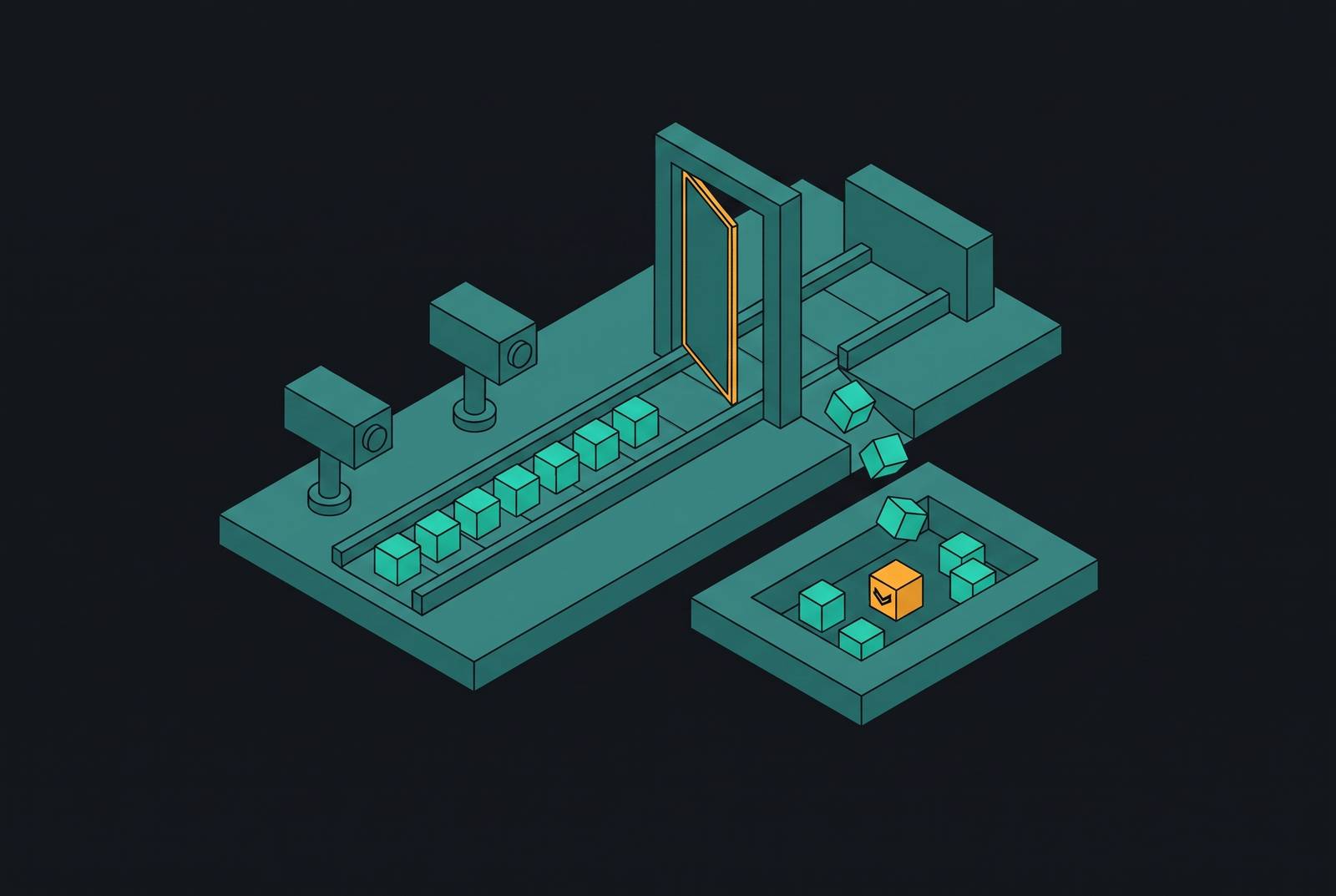
Alarm response time failure in traditional video monitoring centers begins before an operator opens a feed. Low-signal triggers take up the time people have to pay attention, so real threats can lose their response window while waiting for review. The alarm queue becomes a one-way door for missed threats because delayed attention cannot recover an opportunity to intervene. Breaking that pattern requires contextual triage before human review.
Why the alarm queue is structurally different from a backlog
A false alarm costs operator attention, while a buried real threat can cost the client the event itself. That asymmetry makes the queue a structural problem. A backlog can remain unfinished without necessarily destroying the value of the work. A security event has a response window. Once that window closes, finishing the review cannot bring back the chance to act.
The queue’s composition is set upstream, by the mechanism that generates alarms. Staffing changes how many signals people can examine, but it does not change which signals enter or distinguish an urgent threat from an environmental trigger. When arrivals outpace review, both wait for the same scarce attention. The system postpones the distinction it most needs.
Additional operators can increase throughput, but they cannot retroactively shorten a delay that has already allowed an intruder to leave. Even with a change in staffing, someone must still check each ambiguous trigger. A center must therefore identify threats before a human queue consumes the time available to respond.
How pixel-change detection floods the queue before an operator sees a single frame
Legacy VMS motion detection counts what changes from one frame to the next. When enough pixels change, the system fires, without a model of what moved or what the movement means. A person scaling a fence and a cloud shadow crossing the ground can both satisfy its triggering condition. The distinction is absent from the detection logic. The resulting noise is not necessarily evidence of a malfunctioning sensor.
The problem-oriented policing analysis compiled for the DOJ COPS Office finds that the vast majority of police responses to burglar alarms concern false activations. Los Angeles found roughly 92 percent of its alarm calls were false, costing millions in lost patrol time. Burglar-alarm responses are the subject of these findings and define their scope. They nevertheless demonstrate the scale of resources consumed when low-value activations enter a response system.
Raising trigger thresholds can reduce false positives while increasing missed events, and shrinking detection zones creates coverage gaps. Time schedules introduce predictable blind windows instead. Each workaround suppresses some inputs without establishing whether the remaining activity is a threat. The algorithm’s understanding limits what settings adjustments can achieve.
What a queue of predominantly false alarms does to an operator's judgment over a shift
A queue dominated by false alarms teaches operators that an alert usually predicts nothing requiring action. Discounting that signal is a rational adaptation to its low reliability. In Bayesian terms, repeated false activations establish a broken prior against which each new alarm is judged. The operator learns from the system’s own output. Unfortunately, the next real event arrives through the same discredited channel.
This adaptation adds to the strain of watching for long periods. A single operator reviewing many camera feeds must process low-signal information for hours while remaining ready to recognize the rare consequential event. As fatigue accumulates, the system demands its most important judgment from an increasingly depleted resource. The architecture erodes the attention on which it depends.
Training and hiring do not change that underlying exchange. High false-alarm volume promotes burnout, burnout contributes to missed incidents, and missing contextual data limits what can later be reconstructed. Treating them as individual performance problems leaves their common source untouched, because the detection layer continues delivering the same low-value workload to the next operator.
Why the standard SLA hides the queue problem rather than measuring it
Time-to-acknowledge records receipt or acknowledgment of an alarm as a separate milestone from the moment a verified threat reaches someone able to act. That distinction gives queue delay contractual cover. A center can satisfy a signal-handling benchmark while the consequential work of understanding and escalating the event remains unfinished.
The traditional response chain extends beyond that first acknowledgment. Calls may proceed from the premises to keyholders and then to emergency services, adding many minutes before authorities are notified. When a metric covers only the first step, the reported result leaves out the time those calls take. The gap between signal receipt and verified escalation is exactly where an apparently prompt service can deliver a late response.
Police departments typically elevate video-verified alarms to crime-in-progress status, with materially faster response than unverified alarms. Time-to-verified-escalation exposes a consequential interval that acknowledgment alone conceals.
How the queue converts individual false alarms into a systemic guarantee of buried threats
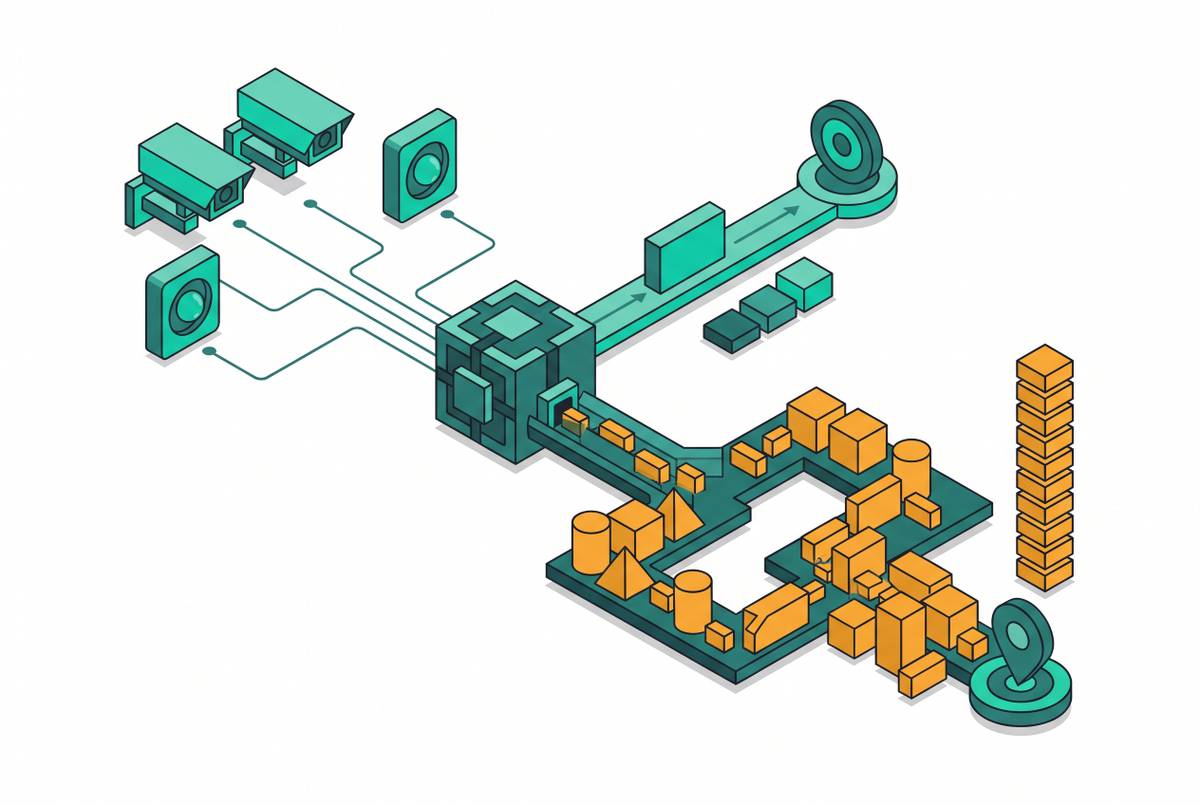
Pixel triggers first fill the queue with events that someone must check but that rarely call for action. Each false alarm then consumes operator time, leaving a real threat to wait behind work the system cannot distinguish as less urgent. There is no informed priority lane. Classification happens only after the delay has already begun.
Repeated false activations also leave operators with less attention to give that threat when it finally comes up for review. Fatigue and learned discounting make the last stage less reliable precisely when the first stage has made timeliness more difficult. An acknowledgment-based SLA can then report acceptable performance without exposing either the waiting interval or the degraded assessment.
This is the queue’s one-way-door property. Once the intruder or alerting condition has left the scene, later review cannot reopen the response window. Under sustained overload, buried threats are a predictable output of the architecture. Manually assessing every alarming stream is physically impractical and costly at commercially workable staffing levels. Offshoring, muting noisy cameras, and charging overage fees change labor, coverage, or price, but no staffing adjustment repairs a queue whose composition remains set by the detection layer.
What AI agents actually do differently at the triage stage
Instead of asking an operator to interpret every pixel-change trigger, a computer-vision model classifies moving regions as people, vehicles, animals, or environmental artifacts. This separates nuisance activity such as rain on a lens, headlights, and sensor noise from object classes requiring further assessment. The distinction precedes the human queue. Filtering no longer depends solely on suppressing motion sensitivity.
Behavioral rules then set out when an identified object calls for escalation. A forklift moving through a warehouse can generate nothing, while a person crossing a perimeter tripwire in the early hours can generate a timestamped alert with video proof. Advanced analytics can also describe what moved, where, and when, giving the operator context before a response begins.
That specificity addresses both queue volume and learned distrust. When escalations are predominantly genuine, operators have less reason to discount the signal, although classification alone does not establish that every threat was detected. A quieter queue is not sufficient proof of success. A large false-alarm reduction can conceal under-triggering, so recall and precision are necessary to distinguish useful filtering from missed events.
Why AI filtering only works when it is trained on site-specific context
Object recognition cannot determine authorization on its own. An AI agent may correctly identify a person but wrongly escalate what that person is allowed to do. Conversely, a rule that treats an object or activity as generally acceptable may fail to recognize when it occurs under prohibited conditions. Both errors undermine triage.
A retail floor and a truck yard perimeter at 03:00 require different interpretations of objects, schedules, and behavior. The system needs to know who is authorized to be where, during which hours, and performing which activities. A delivery driver in a loading zone during authorized hours is not a threat. The same person in the same place outside those hours may be. Without that distinction, object recognition merely changes the source of false positives.
Verification takes a little time while the video is checked against those conditions. That time goes toward finding out whether to escalate, while time spent waiting behind unrelated alarms does not. Audio and video can each add evidence: audio can detect an event early and cover the whole space, while video can confirm what happened within the camera’s field of view. Their value still depends on interpreting the evidence against the site’s authorized activity.
What the human operator's role becomes when AI handles the filter
With AI handling triage, the operator receives an escalation that has already passed an object-level reasoning test. The work shifts from repeatedly dismissing environmental noise to confirming the event and directing a response. Human judgment remains central to the consequential decision. Dispatching police, contacting a keyholder, or triggering a site response requires accountability and authority that the AI should not exercise alone.
AI supplies continuous, scalable attention at the filtering stage, while trained people interpret escalations and decide what action follows. Each layer addresses a different constraint. Requiring humans to provide machine-scale screening wastes their judgment, while allowing automated classification to stand in for accountable response confuses detection with decision-making.
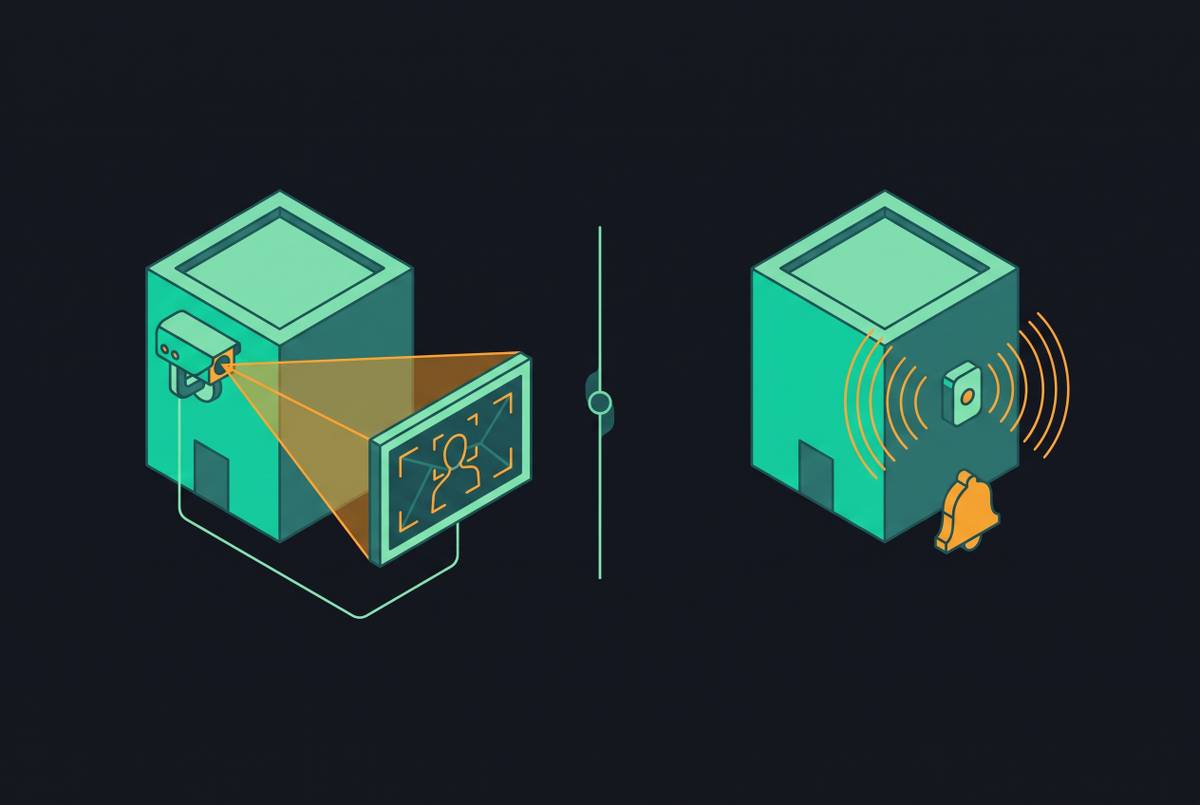
Context must reach the operator with the escalation for that division of labor to work. A video clip, location, timestamp, and object classification let the human judge the event without having to search again for the basic facts. The accompanying audit trail can document what the system detected, dismissed, escalated, and why. That record gives operators and clients a basis for examining the filter as well as the response. The number of cameras alone cannot show how either function works when their feeds still end in an unfiltered queue.
What security buyers should actually measure when evaluating a monitoring service
The lesson for buyers is to evaluate the intervals and decisions that legacy metrics leave hidden. False-alarm reduction, recall, and precision should be requested together. Recall measures the share of real events detected, while precision measures the share of escalations that were genuine threats. Each exposes a different failure mode. The combined measures show whether the service reduces wasted attention while preserving detection and producing useful escalations.
The SLA should then be examined for the moment its clock stops. Buyers should ask whether it measures acknowledgment or time-to-verified-escalation, rather than accepting “response time” as a sufficient definition. The distinction must survive the contract language. A prompt acknowledgment offers little evidence about how long a threat waited for an informed human decision.
Site context deserves equally concrete scrutiny. Buyers should ask how authorized schedules, personnel, and activity enter the system, and how that information changes when site operations change. They should also establish whether operators receive the video, location, timestamp, and classification with an escalation or must retrieve them separately. A secondary lookup can reintroduce delay after the filter has done its work.
Finally, buyers should request the record of detections, dismissals, escalations, and the reasons behind them. That evidence makes the service’s decisions open to examination rather than leaving performance inside a headline reduction figure. Compare architectures by their ability to get a verified threat into accountable human hands while there is still time to respond.