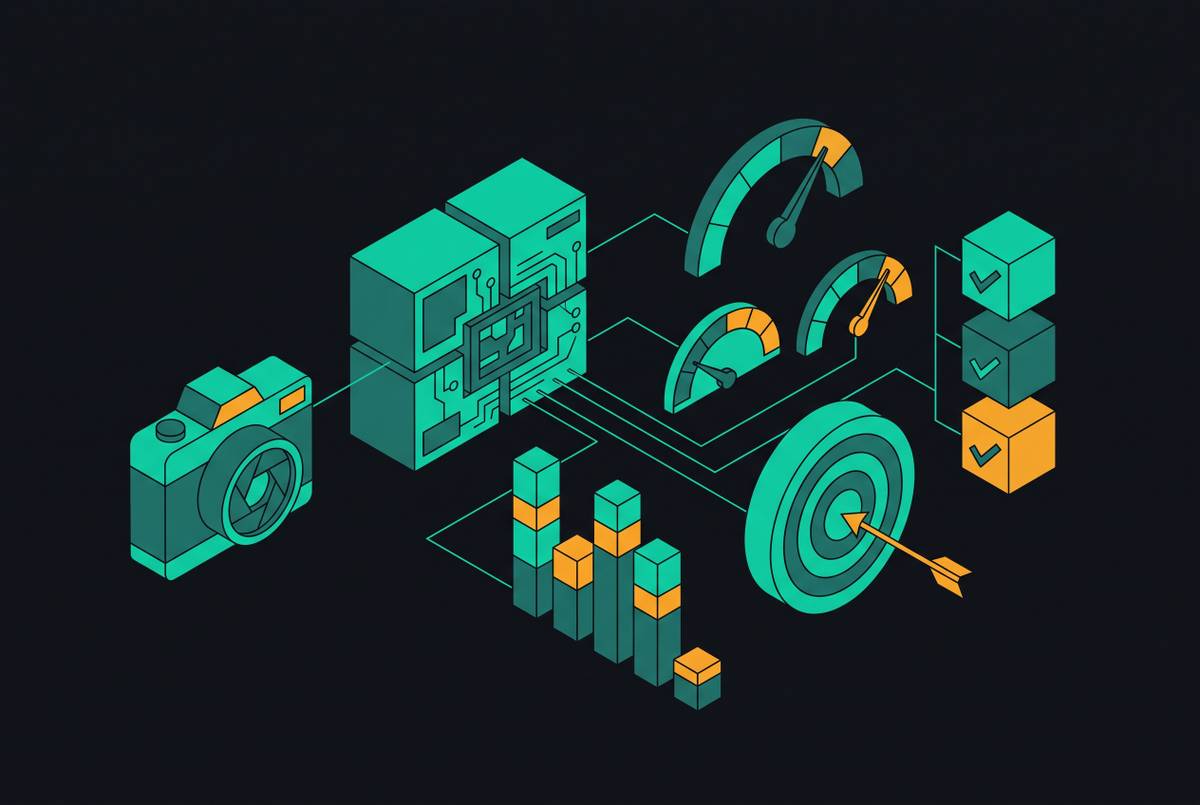
Authorized Activity Recognition in AI Video Monitoring
AI learns what belongs at your site so operators focus only on real threats.
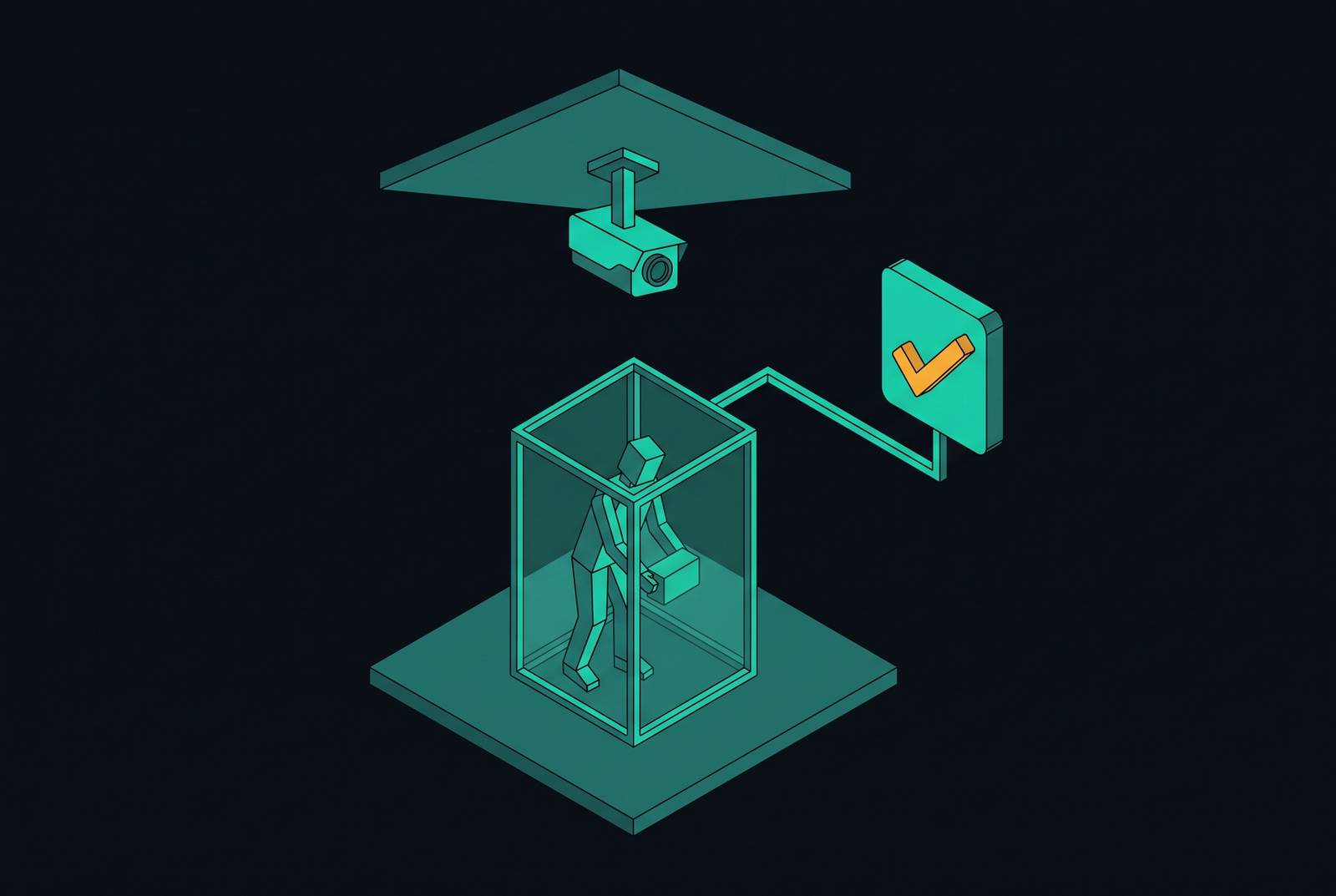
Authorized activity recognition in AI video monitoring depends on knowing a site’s people, schedules, and rules. An AI triage plus human response model for commercial video surveillance uses that context to filter alarms before routing verified threats to live operators. The division of labor is clear, with AI interpreting activity against site protocols and trained people handling judgment and response.
Why motion detection alone cannot distinguish a threat from routine activity
A monitoring operator’s shift can become a stream of clips showing an employee walking to a car, shifting headlights, a stray animal, and a person near a door. Most of those alerts require no security response, but each still takes a place in the review queue. A real threat joins that same queue without moving ahead because of what it means. The operator must therefore first sort through noise before responding to threats. Monitoring suffers from an interpretation gap.
Traditional alarm systems detect changes in pixels but do not understand what those changes mean. A trigger indicates movement, but it does not establish whether someone belongs in the area or is acting within permission. Even detecting a person rather than a shadow leaves that central question unanswered. Object recognition can describe what is present without determining whether its presence warrants action.
Adding cameras adds more places that send alerts but does not explain what those alerts mean. Adding operators gives the queue more reviewers, but leaves each reviewer with the same interpretive burden. What is missing is the information that separates permitted activity from an exception.
What "authorized activity" actually means and why it is always site-specific
Authorized activity is activity that complies with the rules of a particular site. Authorized activity recognition is the judgment that what the system sees fits those rules. It is not a generic capability that an AI system can apply without learning what permission means in that environment. The practical mental model is a rule set against which the system checks activity.
A person at a side door at 2 a.m. makes the distinction clear. That person could be part of an overnight cleaning crew whose access is permitted at that door. The same presence could be a threat if the person has no authorization or the door is outside their permitted route. Authorization comes from their relationship to the site’s rules.
Those rules cover known personnel and their schedules, which vehicles and routes are authorized, which zones are permitted, and who has temporary access. They also account for exceptions such as early shift arrivals and overnight cleaning crews. An unusual pattern may be authorized, while a familiar one may still break a rule. Normal activity must therefore be defined by what the site permits.
The three layers of site context an AI agent needs before it can filter meaningfully
The first layer is identity and access, which establishes who belongs at the site. It covers personnel the site knows, vehicles it authorizes, vendors it recognizes, and contractors. A cleaning crew’s presence after hours cannot be interpreted meaningfully if its access authorization is absent from the system. Linking this knowledge to access control and scheduling systems lets the system use it to check whether someone has permission. Without it, a person with authorized access may appear no different from anyone else in the footage.
The second layer is temporal rules, which establish when that access applies. The time that access is allowed depends on business hours, shift windows, deliveries, and maintenance work. Authorization for a delivery truck at a loading dock requires both recognition of the vehicle and arrival within the permitted delivery window. Similarly, a forklift moving through a warehouse at 3 p.m. on a Tuesday may be routine, while the same movement at 3 a.m. on a Sunday is anomalous under that site’s schedule.
The third layer is behavioral and spatial rules, which establish what someone may do and where. A contractor may be allowed on the property but prohibited from entering an exclusion zone. Rules at industrial sites may also cover PPE, confined space entry, and procedures at the loading dock. In a service model such as Verdun’s, these layers provide the context an AI agent needs to review an alarm before human escalation. Their value lies in integration, because permission at one layer does not establish permission at the others.
How AI agents reason across these context layers rather than just match against them
Detecting a person in a zone answers a question about presence. To judge whether that person’s activity fits their authorization, the system must connect who they are, when and where they are, and what they are doing. This composite judgment distinguishes contextual verification from a set of independent detection flags.
Consider a worker entering a confined space. The system may recognize the worker, yet the scene may show them entering without a spotter and without visible personal gas detection. If the permit has expired, the site’s authorization data adds a further conflict that the image alone cannot supply. Taken together, these conditions carry a different meaning from a worker simply standing near an entry point. Reasoning connects what is visible with what the site allows.
Vision-Language Models (VLMs) enable scene interpretation beyond object detection. To be useful in monitoring, they must combine that interpretation with the site context that applies, since footage alone cannot show schedules or permit status. The resulting verification decision can carry a classification, namely confirmed, rejected, or unverified, with the reasoning attached. NVIDIA’s Alert Verification Service uses these classifications for upstream alerts. A classification helps the next stage decide what to do, while a detection event still needs to be interpreted.
What happens when site context is missing or goes stale
Context is a living data set. A personnel list can be correct at onboarding and incomplete when a new employee starts. A delivery schedule can stop reflecting operations after a change in delivery windows. New uniforms, vehicles, shelving, lighting, or construction zones can also change the conditions under which activity is interpreted. The system may still follow its configuration correctly even when that configuration no longer matches the site.
This is a service-level failure rather than necessarily a failure of the AI to follow its instructions. The provider has maintained a snapshot instead of maintaining the knowledge needed for current decisions. Personnel, schedules, and spatial restrictions each require a defined update process. Otherwise, routine activity can become an apparent exception, and signal quality can deteriorate without an obvious interruption in service. Alerts still arrive and operators still review them, so visible activity is not proof of useful monitoring.
The consequence is a return to the original queue problem through a different mechanism. High volumes of low-confidence alerts bring back alert fatigue and response desensitization. The presence of AI can obscure that decline if the service is assumed to be handling interpretation automatically. Keeping context up to date is therefore part of the monitoring service itself. Its purpose is to preserve the connection between current site operations and the rules used to judge them.
How authorized activity recognition plays out differently across commercial, multifamily, and industrial sites
Commercial sites organize much of their authorized activity around operating hours and scheduled access. Staff enter during business hours, delivery vehicles use loading docks at the agreed times, and vendors work in back-of-house areas where they are allowed. Meaningful exceptions include after-hours perimeter breaches, vehicles in unauthorized zones, and people in restricted areas when the site is closed. A delivery driver arriving at 11 p.m. illustrates why the schedule matters. Without it, the system cannot distinguish a permitted late delivery from an unauthorized presence merely by recognizing a person or vehicle.
Multifamily properties require a different balance because residents may legitimately use lobbies, garages, and amenity spaces at any hour. Guest access with a resident escort and service personnel working within permitted windows add further rules. Time alone is therefore less useful as a filter than it is at a commercial site that closes. Identity and behavior carry more weight when interpreting loitering near entrances, door or window testing, tailgating through secured doors, and non-resident presence in restricted areas.
Industrial sites have rules for work permits, shift windows, PPE, and exclusion zones. Recognition of a worker is only the beginning of an authorization decision, because the task and location may impose additional conditions. Confined space entry makes these dependencies particularly consequential, as permission to enter the facility does not establish permission to perform that work. The system must check the conditions that apply together to tell ordinary work from risks that compound one another. Per-site calibration is therefore integral to safety monitoring, rather than an optional refinement of generic detection.
How do AI filtering and live operators work together for commercial security cameras
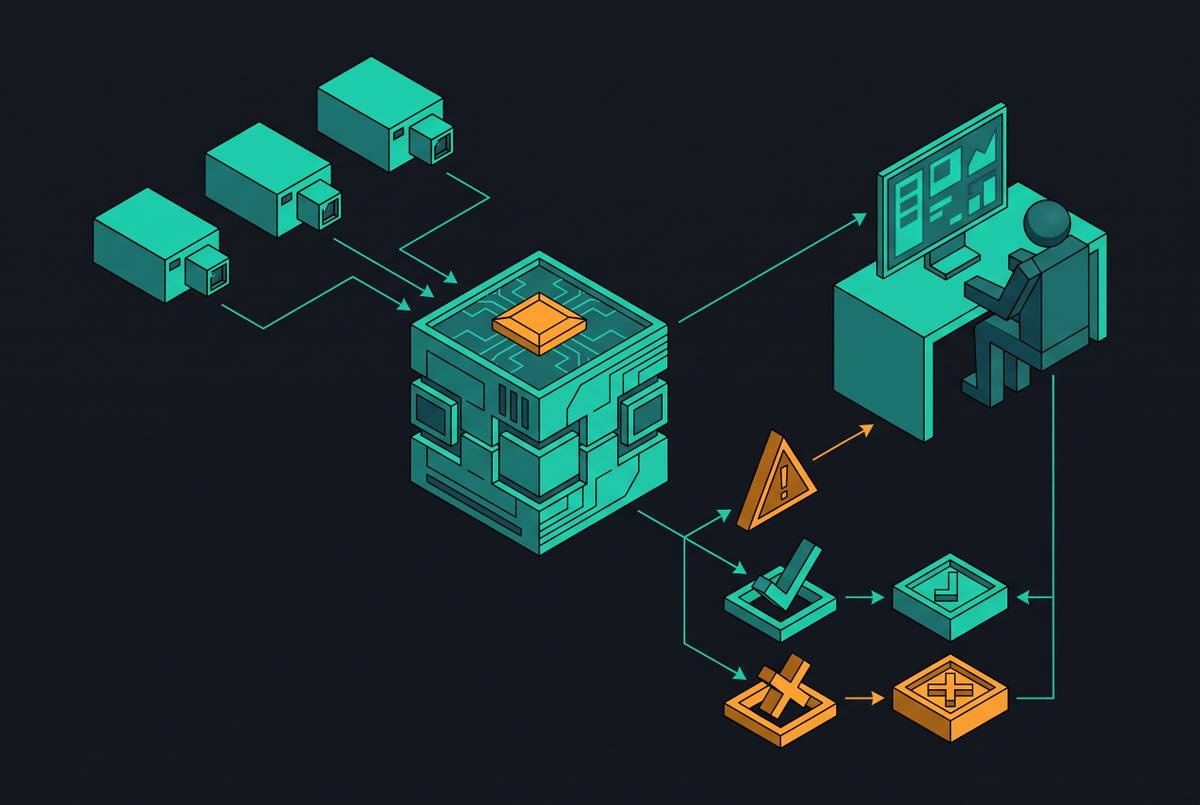
AI filtering changes where human judgment enters the process. In an AI triage plus human response model, AI checks alarms against site context before a live operator receives a verified threat. The human is no longer required to establish the meaning of every routine detection. Instead, the operator can apply judgment to the response and to ambiguities that remain. This is the architectural distinction between AI-assisted response and analytics that still send every detection to a person.
Verdun deploys AI agents to review every alarm against site context before escalating verified threats to trained operators. The operator retains responsibility for communication with responding officers, activation of escalating response protocols, and accountable dispatch decisions. Human expertise is also needed when a situation calls for judgment beyond the classification. AI triage does not transfer that professional accountability to a model.
The speed benefit follows from the smaller, better-qualified queue. When an event arrives already classified with its reasoning, the operator does not begin with the same blank interpretive task as a reviewer receiving a raw detection. Site-trained response can include talk-down, dispatch, and notification under the relevant protocol. The architecture also supports an audit trail in which AI classifications and operator actions are logged with video, metadata, and timestamps.
What a security buyer should ask before trusting any vendor's claim about authorized activity recognition
Buyers should first ask how the vendor captures site context. The useful answer identifies what onboarding collects, including personnel lists, schedules, access rules, and zone maps, and explains how that information enters the system. A general claim that AI learns the site does not explain how permission is defined. The distinction to listen for is between observing patterns and recording the rules that make those patterns authorized.
Buyers should next ask how that context changes when operations change. A vendor should be able to explain the process for a new employee, a revised delivery schedule, or a temporary construction restriction. The answer establishes whether the service maintains current knowledge or relies on its initial configuration. This is also where responsibility for ongoing protocol maintenance becomes concrete.
Third, buyers should ask vendors to explain what the AI escalates and why by following an event from detection through the context layers checked, the classification assigned, and the information passed to the operator. Buyers should ask which confirmed, rejected, or unverified events reach a person and on what basis.
Buyers should also ask for the measured response time to a verified threat. Defined SLAs for AI classification, human review, and operator action make the response chain measurable. Together, these questions test how site knowledge is built, maintained, applied, and translated into action. Authorized activity recognition is only as useful as the current context behind it. Cameras that monitor without that context still produce noise, just with a more expensive label.