Scalability of AI Agent Monitoring During Peak Alarm Periods
AI pre-screening absorbs alarm volume surges that human operators cannot scale to handle.
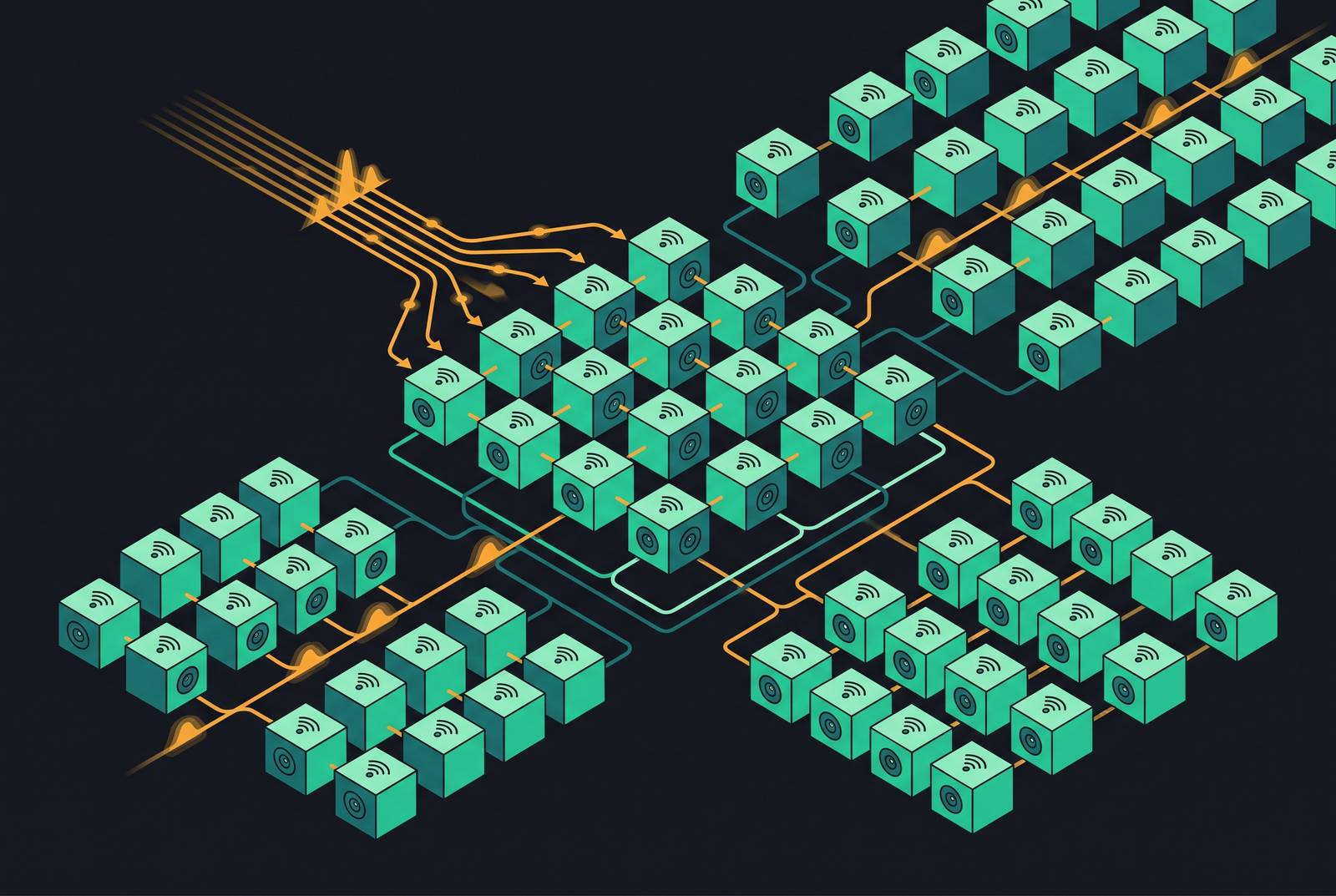
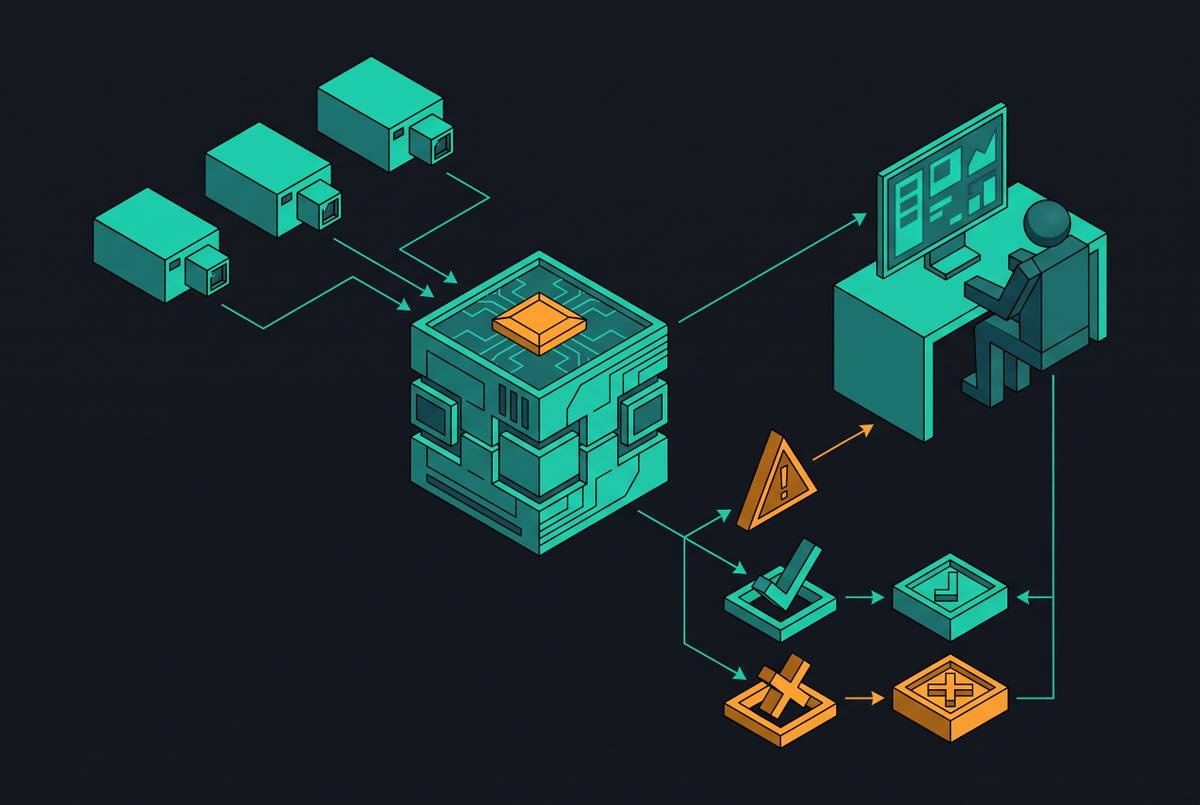
An AI triage plus human response model for commercial video surveillance analyzes alarms before routing verified events to live operators for judgment and intervention. Its scalability advantage is architectural. During peak alarm periods, parallel AI pre-screening absorbs the raw volume surge rather than forcing operators to classify every signal in the same queue.
Why peak alarm periods expose a ceiling that more operators cannot raise
Congestion begins when false positives, routine signals, and genuine threats enter the queue with the same priority. Before an operator can respond, someone must work out which alarm needs action. Every signal that comes in therefore brings an obligation to perform manual triage, whether or not it points to a threat. The system is designed to generate overload. Adding operators distributes that obligation across more people, but it does not remove the work that creates congestion or raise any individual’s cognitive limit.
Legacy video management systems were built for storage and retrieval. Transline Technologies’ VMS architecture analysis describes platforms that record reliably but cannot distinguish meaningful events from irrelevant motion as camera deployments expand. That distinction is left to the monitoring center. Bolting analytics onto the pipeline can preserve the original latency and data silos, delaying an alert until after the useful response window has closed. The failure requires an architectural answer.
How fragmented workflows translate the architecture problem into operator burnout and turnover
That architecture also makes each alarm harder to resolve. BoldGroup’s workflow analysis identifies fragmented systems, undifferentiated priorities, and manual repeatable tasks as compounding sources of operator strain. Video is on one screen, access control is on another, and environmental information is somewhere else. The operator becomes the integration layer between them. Under time pressure, reconstructing an event consumes attention before the operator can judge its urgency, while routine noise competes with events that warrant immediate action.
The work continues after that initial judgment. Notifications, logs, callbacks, and escalation tracking may be repeated by hand hundreds of times per shift. Each step creates another opportunity for error as fatigue accumulates. This strain rarely appears as a distinct budget item, but its consequences do, through slower escalations, mistakes under load, and turnover.
Capable operators are among those who feel the drag most sharply and leave, after which the organization recruits and trains replacements into the same workflow. The same weakness is still there when alarms next peak. Retention bonuses and changes in staffing may ease the pressure for now while leaving its source unchanged. Fixing retention without fixing workflow is therefore an expensive, temporary intervention.
What AI agents actually do differently — reasoning about context rather than passing volume to a human
First-generation analytics flag motion, while a context-aware agent assesses what that motion means before escalating it. A person entering a restricted area after hours presents a different event from someone following a known path during authorized hours. Flagging establishes that something happened, but reasoning determines whether it warrants attention. That distinction changes what the operator receives, rather than merely accelerating delivery of the original noise.
Every alarm still receives a review by the agent through structured triage. Cloud AI platforms can convert tens of thousands of raw alerts into as few as 4–6 actionable events per camera daily. The purpose is a shorter queue whose entries have already been assessed against the conditions that make an event significant.
How inference is designed affects whether that assessment comes back in time. Object detectors can trigger a vision-language model as a second-opinion layer that confirms, rejects, or flags uncertain alerts, rather than running the slower, costlier model on every frame. Edge inference removes the cloud round trip by processing at the camera. Transline’s analysis also identifies natural language event queries, open integration layers, and continuous learning pipelines as requirements of an AI-native architecture. Together, these requirements distinguish reasoning within the monitoring workflow from an analytics module attached to a storage system.
Why AI agents do not break under peak load — the scalability property that human cognition cannot replicate
Human classification performance degrades as alarm volume and shift length increase. An undifferentiated queue concentrates that degradation at the moment when accurate decisions are most urgent. More staffing can spread the workload, but it cannot make a person’s attention elastic. AI agents process events in parallel. A surge across cameras can therefore undergo simultaneous assessment instead of becoming a backlog of raw alarms awaiting operator attention.
An agent does not become tired across a shift or lose detection accuracy because it has reviewed too many alarms. Its processing capacity can absorb the surge before human handoff, so operator workload is shaped by verified events. A peak in motion alerts does not automatically become an equivalent peak in manual triage. Activu’s 2026 analysis projects that 70% of critical infrastructure operators will shift from continuous manual monitoring to automated, event-driven alerting.
This changes the economics, but reliability comes first. The cost of staffed coverage rises roughly with the hours and coverage needed, and rises in wages and turnover can add to it. AI pre-screening lets operators cover more accounts without their numbers having to grow at the same rate just to handle noise. There must still be enough people to respond to verified events. The architectural fix is that raw volume no longer has to pass through human cognition before the system can distinguish a threat.
Why site-specific context is what separates useful AI triage from a sophisticated false-alarm machine
Parallel processing alone does not make triage trustworthy. An agent that lacks site-specific context can send a different set of false positives to operators and leave them with just as much work. A person in a restricted truck-yard zone at 2 a.m. is a threat under one protocol, but authorized activity during a scheduled overnight delivery. The agent needs the schedule and protocol to interpret what it detects.
Useful context takes the form of inspectable controls. These can include authorized-activity schedules, geofenced exclusion zones, PPE compliance rules, time-of-day lifting envelopes, and dwell thresholds that distinguish transient motion from sustained presence. These controls set the rules for when an event needs to go to a human. Broad detection thresholds applied uniformly cannot provide the same site-dependent judgment. A narrow deployment with well-defined use cases and clear controls is more auditable than expansive coverage whose decisions cannot be explained.
That context also needs to follow the site as it changes. Camera placement, lighting, obstructions, and alarm traffic patterns affect calibration, while authorized activities may change the meaning of familiar motion. Transline’s analysis identifies continuous learning pipelines as a baseline architectural requirement. Static rules are not a permanent fit. The answer to the objection that AI creates false positives is ongoing, site-specific protocol coverage.
How do AI triage and human response work across commercial, multifamily, and industrial sites
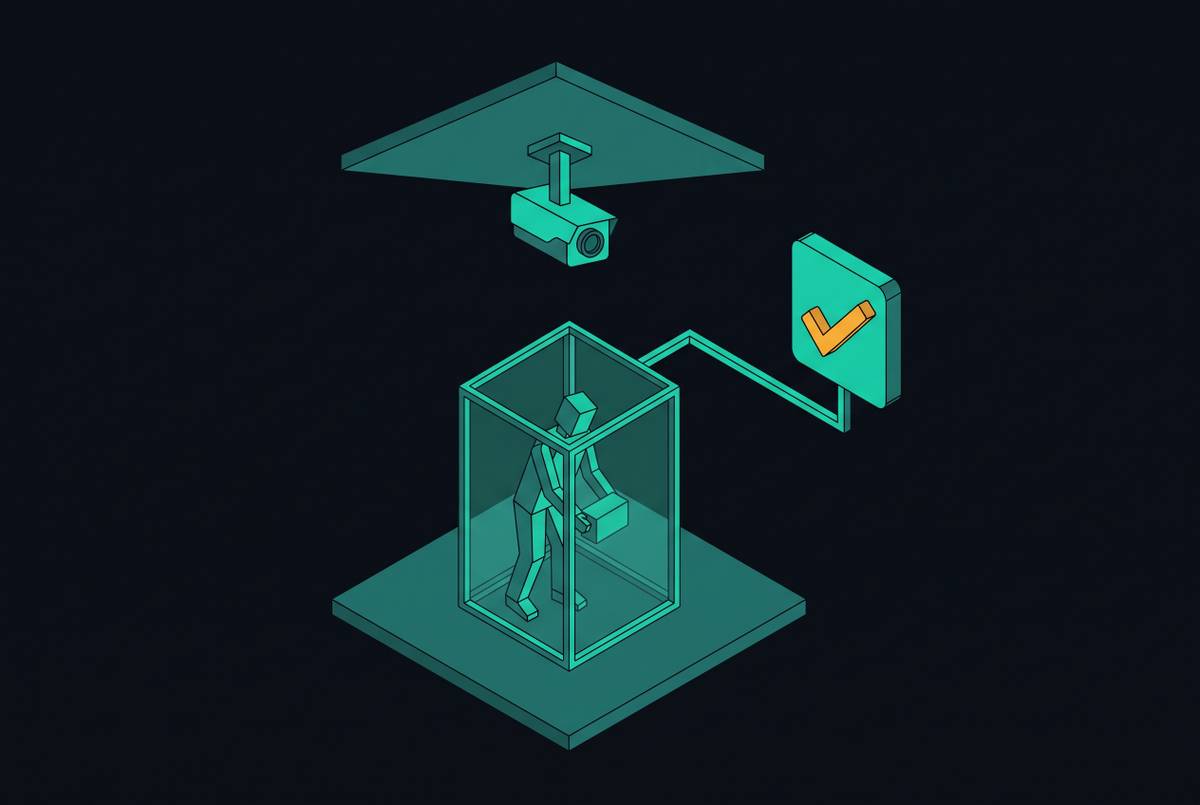
For commercial sites, including retail premises, employee lots, and truck yards, the agent screens high volumes of closed-hours motion for perimeter breaches, unauthorized vehicle approaches, and loitering that crosses defined thresholds. Only then does the event reach an operator for verified response. After AI verification, a human still carries out Voice-down deterrence. Speaking through the camera’s audio still requires that assessment first. Visual verification also has purchasing significance where insurance carriers require it for premium coverage tiers.
Multifamily properties present a different filtering problem because authorized movement is common across parking areas, lobbies, mail rooms, elevators, and perimeters. Raw motion is a weak indicator of risk. At each of the multiple access points, the agent must tell authorized entry apart from suspicious dwell or unauthorized access attempts. Matching access events to video identity can reduce investigations from hours to minutes and sharply reduce false alarms. Alert-to-intervention time, incidents per unit, and uptime adherence provide operational measures of whether that filtering supports the required service.
The model also works at industrial sites in manufacturing, logistics, and multi-site portfolios. Moving from one guard per plant to one security operations center for the portfolio depends on pre-filtering raw feeds from every facility, so human monitors receive flagged events. Safety events need faster alerts than intrusion does. Forklift-pedestrian proximity, falls, and PPE non-compliance require edge inference to meet sub-second, typically sub-200 ms, notification targets. Across these environments, the operator begins with an assessed event and its context rather than rebuilding the triage decision from scratch.
What the ANSI/TMA-AVS-01-2024 standard means for buyers evaluating AI-augmented monitoring
The ANSI/TMA-AVS-01-2024 Alarm Validation Scoring Standard gives buyers a framework for judging the evidence behind an escalation. Its five-level classification, Levels 0–4, replaces a binary intrusion-or-not signal with a description of what is known at dispatch. The Monitoring Association defines Level 0 as “No Call for Service” and Level 4 as “Call for Service with confirmed threat to life.” The level describes what the monitoring center can demonstrate when requesting service.
The International Association of Chiefs of Police ratified a resolution encouraging use of the ANSI/TMA-AVS-01 2023 Alarm Validation Scoring Standard, a different version from the 2024 version named here. Municipal verified-response ordinances add a practical consequence to the broader verification principle. An unverified alarm may not produce a police dispatch, however quickly the monitoring center relays it.
For buyers, the lesson is to ask what level a vendor’s alarms typically reach at dispatch. AI pre-screening can establish evidence before escalation, supporting the classification warranted by the event. A higher level is not the goal for every alarm, since Level 0 explicitly provides for no call for service. The goal is evidence-based classification.
What a structurally sound monitoring architecture looks like — and what to ask before signing a contract
A sound architecture places contextual assessment before human response and preserves review across the monitored coverage. Camera count and average response time do not establish whether a vendor meets that requirement. Buyers should ask whether every alarm is reviewed or whether noisy cameras are muted or suppressed to manage volume. Muting trades coverage for a more comfortable queue. They should also find out whether AI pre-screens before human handoff or gives advice while leaving people to do manual triage.
The next questions should test the quality and timing of that handoff. Buyers should ask whether site protocols are inspectable rules tied to schedules and authorized activity. They should request verified-threat-to-human escalation time alongside raw alarm-receipt time. Those measurements describe different points in the workflow. An alarm can arrive quickly but still wait behind unverified events before anyone knows how urgent it is.
Dispatch questions complete the evaluation of the response path. BoldGroup’s analysis frames the underlying test as both helping operators cope with load and asking why the operation produces so much load. The contract should establish that triage occurs before the human queue, rather than leave operators to absorb the same structural failure with newer tools.