Muting a Camera Trades a Noise Problem for a Blind Spot That Never Heals
Silencing noisy cameras clears the queue but hides real threats.
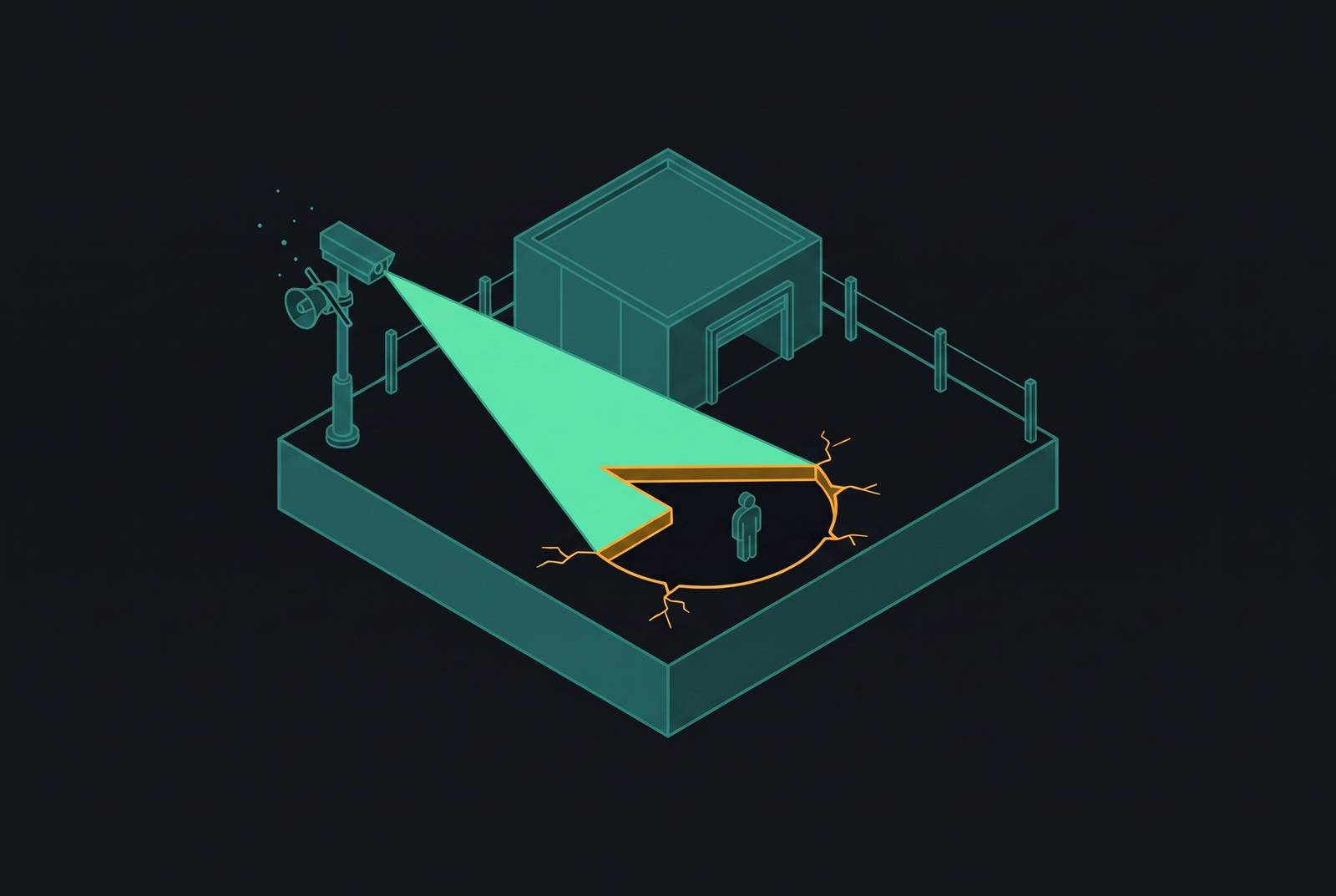
Muting noisy cameras is not a monitoring solution because it removes both false alarms and genuine threats from the operator’s queue. The camera may remain online while its field of view becomes a blind spot that health dashboards do not flag. Context-aware triage addresses the noise without silencing the source, but it requires monitored AI performance and human judgment to preserve coverage.
Why muting a camera feels like solving the alarm problem
For an operator watching alarms arrive faster than they can be reviewed, silencing a high-alert camera offers immediate relief. The queue stops growing from that source. Reviewing every clip consumes attention that other cameras also need, while accepting overage fees adds cost without removing the noise. Against those alternatives, muting looks like a reasonable way to restore control over a workload that has become impossible to clear.
That workload begins with analytics that detect movement. Wind, shadows, HVAC exhaust, and insects can trigger basic motion detection just as an intrusion can. During working hours, deliveries, cleaning crews, and cashiers add legitimate activity that static analytics cannot distinguish from unexpected activity. Every trigger still requires a decision. The operator must supply the context that the detection system lacks before determining whether any response is warranted.
The Electronic Security Association’s 2025 false-alarm analysis describes basic motion detection being triggered by wind-blown leaves or a stray balloon, leaving an operator to analyze each clip before deciding whether dispatch is warranted. An operator may choose muting after facing that burden over and over, even if they take care with their work. Its benefit is visible as soon as notifications stop. Its cost is harder to see because the next genuine threat has not yet arrived.
How the alarm queue becomes structurally unworkable before anyone mutes anything
The queue is already failing before an operator silences a camera. Legacy monitoring centers assign operators more cameras than a person can meaningfully watch, making limited human attention a business model assumption. Motion-triggered events then compete for the same time to review them, whether or not they involve a threat. The bottleneck is verification.
HiveWatch’s 2026 benchmark report found that only a minority of enterprise security teams consistently meet their own service-level agreements. The same report found that large enterprises reported false alarm rates approaching half of all events. Operators therefore spend much of their review time checking that nothing happened that calls for action. Nearly a third of organizations also depended on manual device health checks, adding another task to the same constrained pool of attention.
A genuine threat at position twenty in a queue of false triggers must wait for review. Its urgency is not yet known. Without verification, the queue cannot reliably distinguish the event that requires intervention from the clips that will be dismissed. Multi-channel monitoring adds the difficulty of handling diverse sensors and communication protocols while separating threats from benign activity. Under these conditions, telling operators to remain attentive does not repair the mismatch between incoming work and their capacity to assess it.
What happens to security coverage when you mute high-alert cameras
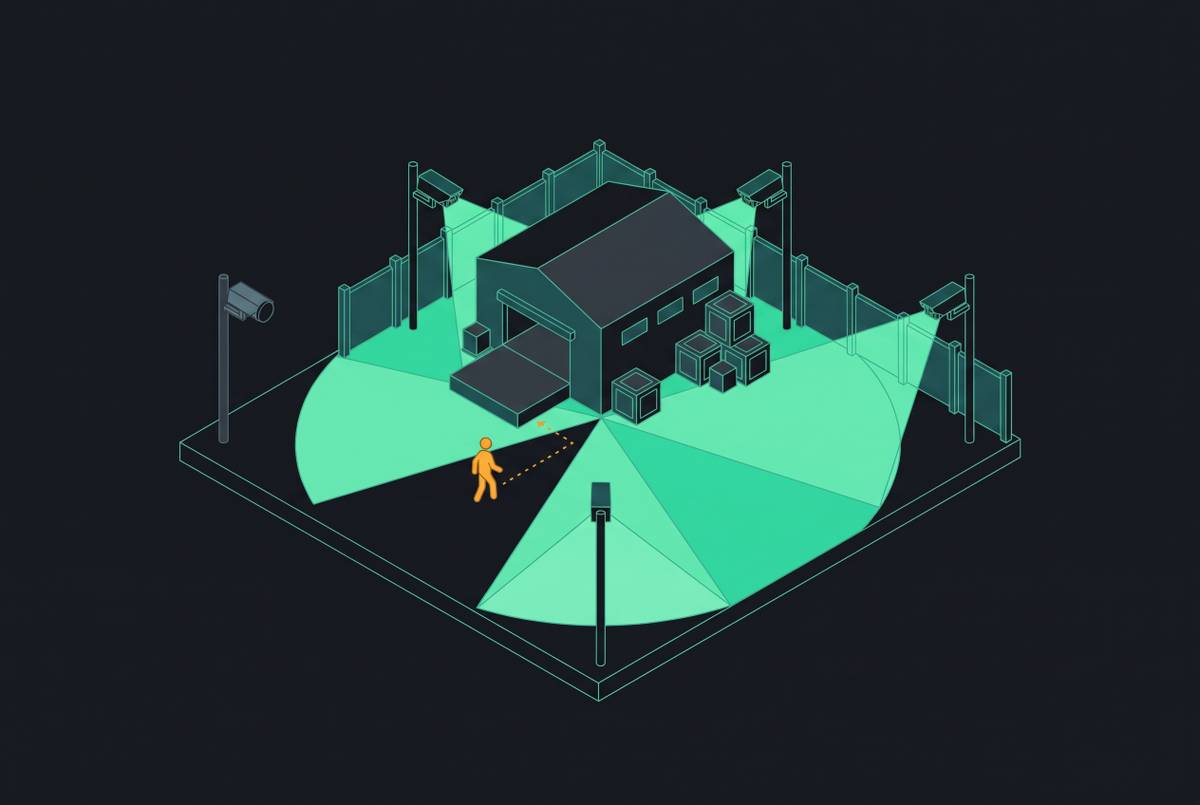
Muting changes whether activity within the camera’s view reaches an operator. A live feed becomes a silent gap in the response workflow even though the monitoring system can continue to report the camera as operational. The device remains connected and may continue recording. Neither condition establishes that someone will receive and assess a developing threat.
A health dashboard can show an online camera without identifying that its notifications have been suppressed. No failure alert necessarily fires, and no incident log records the silence as a coverage failure. The system appears healthy because connectivity has not failed. Yet the path from detection to human response has been interrupted.
Recording does not close that gap in prospective protection. Footage may preserve evidence for later examination, but a recorded approach is not the same as an escalated approach.
Physical wear or changes to the view can leave a similar gap while the camera stays online. Dust, condensation, or changed lighting can reduce analytical reliability between periodic walkthroughs. A camera that passes a check on Monday may be unreliable by Thursday, with no recorded event prompting another check. Weekly or monthly inspections leave an interval in which muted or failed coverage can persist without warning.
Why the blind spot compounds instead of staying contained
A muting decision often lives in a configuration setting rather than an incident workflow that prompts follow-up. That makes the gap durable. The original operator may remember why a camera was silenced, but the monitoring process has no automatic reason to revisit the decision. When staff turn over, the explanation can disappear while the setting remains, leaving successors to treat reduced coverage as the normal arrangement.
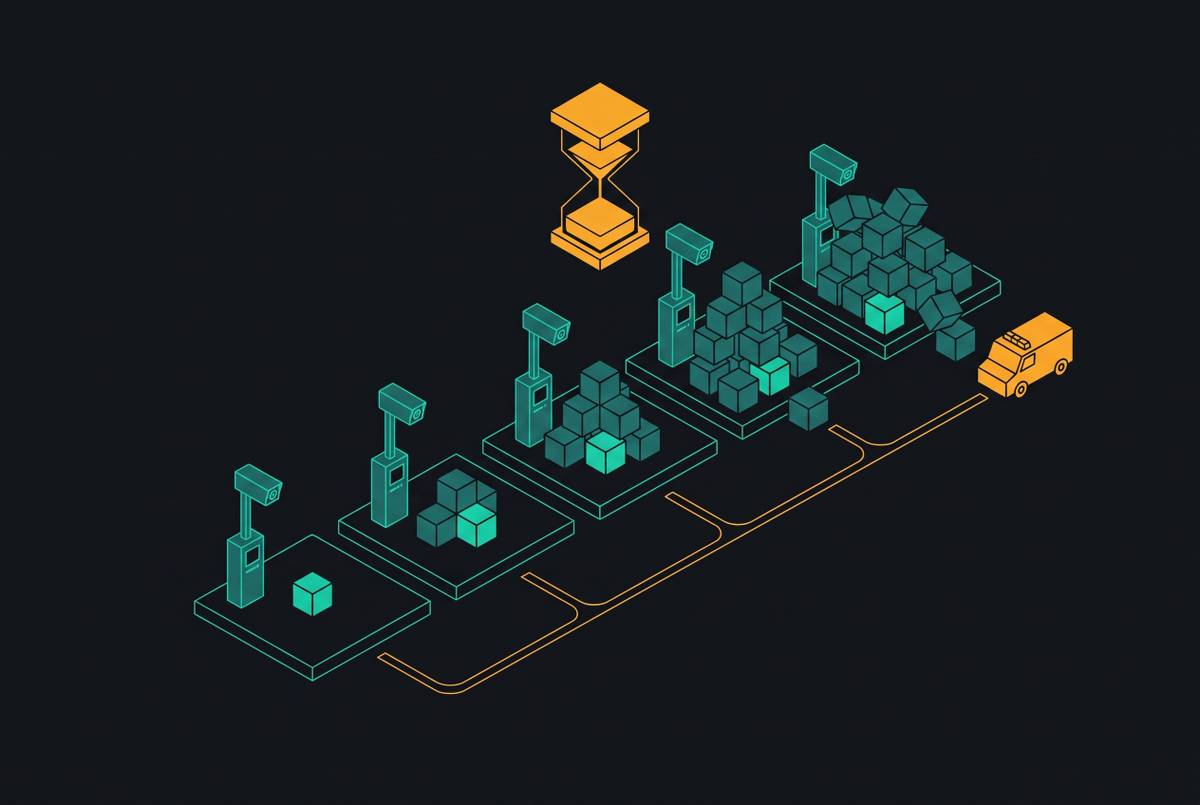
Consider a truck yard that mutes a camera on a noisy fence line. The nuisance at first might be headlights reflected from a wall, which keep producing clips that someone must dismiss. Later, the yard parks a new trailer fleet along that fence. The exposure has changed, but the camera remains silent. An area that was previously treated as a tolerable gap now borders valuable assets, without any necessary connection between the site change and the earlier muting decision.
The gap can also spread beyond the original view. Adjacent cameras inherit an implied coverage responsibility without being configured to fulfill it, and their own noise can lead operators to mute them in turn. ESA’s analysis notes that cameras can leave days of recorded footage to examine after an event. Re-enabling a feed does not erase that forensic burden or provide the intervention opportunity that was lost while notifications were suppressed.
The conditions where silent cameras cause the most harm
Retail sites have both legitimate movement and threats that take advantage of gaps in coverage. Cleaning crews, HVAC systems, and after-hours deliveries produce the recurring triggers that make silencing a camera attractive. Coordinated retail theft, meanwhile, can include checking where cameras are before acting. The same environment therefore creates both the pressure to mute and the opportunity to exploit the resulting blind spot.
Outdoor lots and truck yards add difficult backgrounds. Pallets, parked vehicles, and changing light complicate detection, while stacked goods and vehicles can obstruct views that would otherwise overlap. A perimeter camera may provide the only angle on an approach. Muting that camera removes more than one source of notifications because adjacent views may never have been capable of replacing it.
Contractors and cleaning crews can be expected on a site when other movement would warrant investigation, so movement alone provides insufficient grounds for escalation. Human verification can distinguish authorized work from a threat, but routing every such event through manual review recreates the workload that encouraged muting.
Night and poor weather further weaken the assumption that another camera will compensate. IR mode, rain, and fog can reduce the analytical reliability of cameras that remain active. A feed silenced because it was noisy in daylight offers no fallback when neighboring night-mode footage is also unreliable.
What monitoring architectures without context-aware triage are actually choosing
A model that sends every motion event to a human queue selects for muting under load. Once review capacity is exhausted, removing a source becomes the available pressure valve. The operator is following the system’s implicit logic. Blaming only the person who muted the camera leaves in place the architecture that made the choice reasonable.
Raising detection thresholds reduces triggers by also making genuine activity harder to detect, while assigning a camera lower priority delays its review. These adjustments trade sensitivity or response speed for a workload the monitoring center can accommodate.
Moving operator seats offshore changes the cost per review. It does not shorten the queue by itself. HiveWatch describes an “automation deficit” in which operators remain occupied with manual alarm triage. That finding describes how the work is being done, but it does not show that every affected program left out triage automation when it was adopted.
If a system cannot separate actionable activity from noise before human review, attention must be spent on both, or some detection must be suppressed. A sustainable alternative therefore has to change what enters the queue. More disciplined use of the same pressure valve cannot eliminate the coverage trade.
What context-aware triage changes about the muting decision
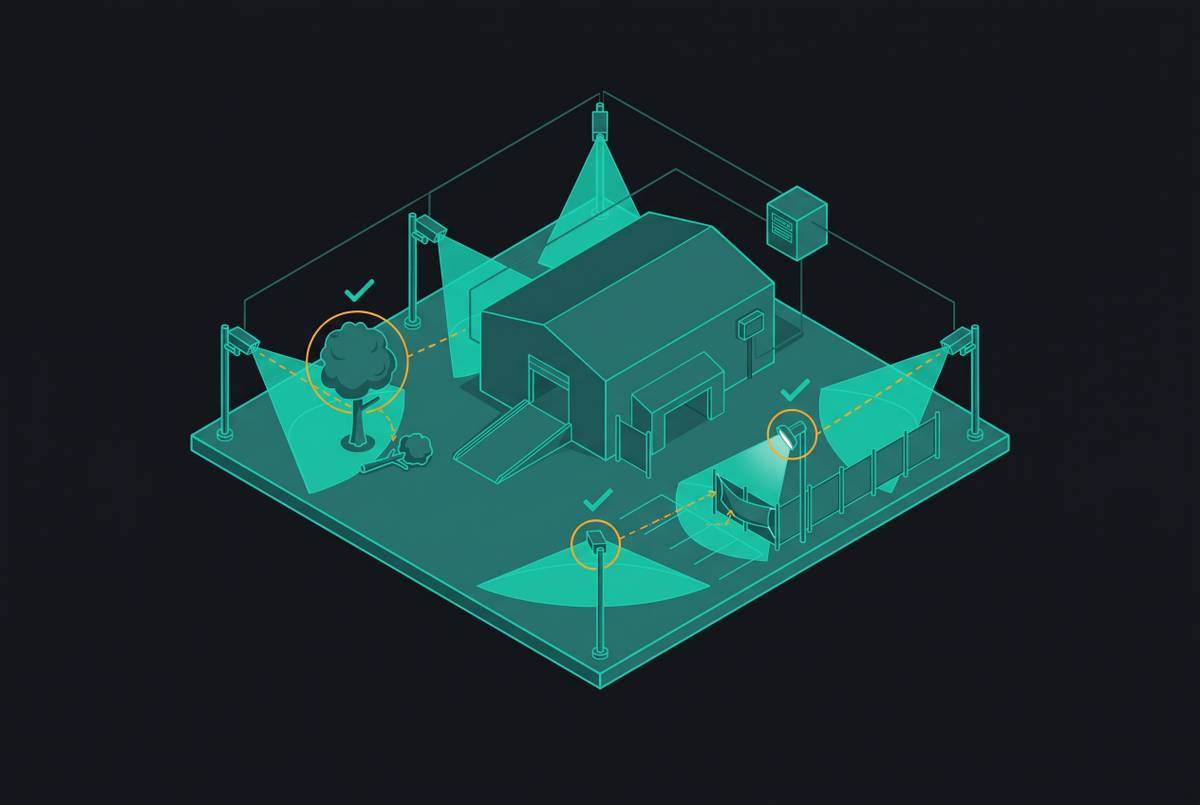
Context-aware triage evaluates time of day, expected activity patterns, object classification, and behavioral cues together. Movement becomes evidence for assessing an event. A cleaning crew arriving at 2 a.m. on an authorized schedule can be resolved as routine activity before it consumes an operator’s attention. The camera stays active, so unexpected activity in the same view can still be escalated.
The architectural distinction is between recording and alerting, and reasoning and escalating. The first model gives humans clips to sort. The second evaluates events before presenting the cases that require action or judgment. ESA’s analysis describes analytics that consider loitering duration, direction of travel, and object type as a way to eliminate nuisance notifications before operator review, with AI and machine learning enabling more detailed differentiation.
Agentic AI extends that process from filtering to routine resolution. Agents assess whether an alert represents a real person, vehicle, or condition, then handle routine cases autonomously while escalating ambiguous or high-stakes cases. This changes the operator’s role from triage clerk to decision-maker. People can spend their time deciding how to respond instead of checking over and over whether anything happened that needs action.
For teams dealing with alert fatigue, verification within the monitoring workflow gives them a practical way to keep routine noise out of the human queue without muting cameras. This removes the source of pressure to silence a camera rather than merely prohibiting the workaround. It also creates a new dependency, because coverage now relies on the quality of the automated assessment.
Why the alternative model still requires honest limits on AI performance
An AI-native architecture can reproduce a muted camera’s invisible failure if it treats its own outputs as infallible. Fewer alerts do not prove better discrimination. In fog, for example, a quieter system may be missing events. Alert volume alone cannot distinguish successful triage from degraded perception.
Performance on clean demonstration footage or a benchmark does not transfer directly to a particular camera angle or site. Night-mode IR, rain, fog, occlusion, and motion blur can all make deployed footage substantially different from training conditions. These changes affect the evidence available for scene reasoning. A system that reasons well from a clear view may become less reliable without any obvious increase in alarms.
The right model pairs agentic automation with per-camera drift monitoring to check whether analytical performance holds steady over time. Human operators also need authority to flag AI uncertainty while processing the escalations the system chooses to send them. Transparency with operators and security buyers establishes where performance is dependable and where closer scrutiny remains necessary.
This qualification strengthens the case for context-aware triage. A muted camera has no mechanism for reconsidering the activity it no longer escalates, while overconfident AI can conceal a similar gap behind apparently successful automation. Monitored AI offers a different basis for trust. Its limits remain subject to human judgment and performance scrutiny, so reduced noise does not have to mean abandoned coverage.