Video Verification vs Alarm Verification in Commercial Security
Video and alarm verification answer different security questions.
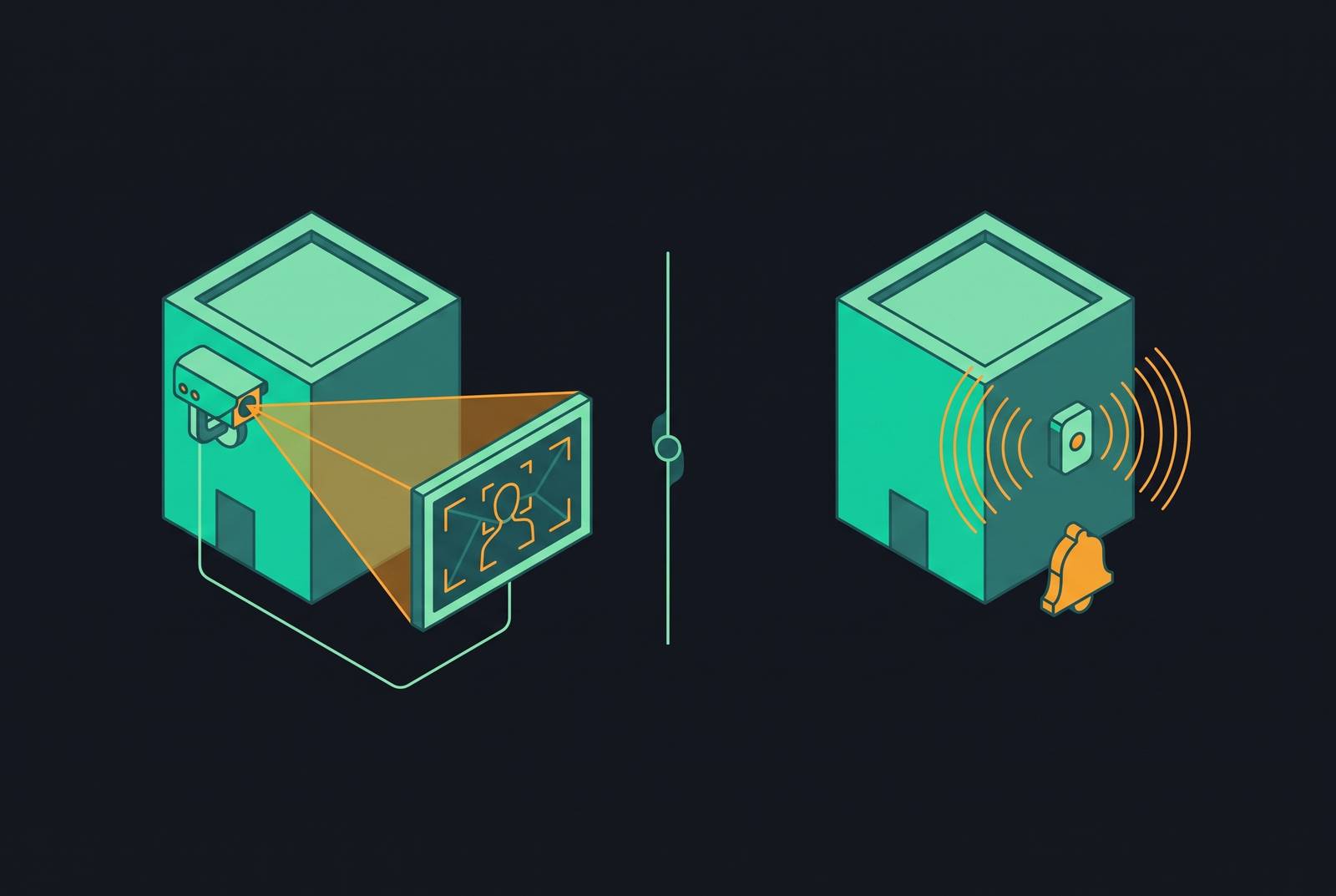
Commercial security buyers hear the word "verified" attached to two different products and reasonably assume the difference is minor. Both sound like improvements over unverified monitoring. The distinction matters because the two methods answer fundamentally different questions, and a buyer who conflates them builds a security architecture on a misunderstanding of what either one actually confirms.
Why "verified" means something different depending on which system you're asking
Verification is not a binary state. It is a description of what evidence was examined, by whom, and in what time window. The term does the most work in commercial security sales conversations, and it deserves unpacking before any contract is signed.
As Cunningham Security frames it, "The operator assesses the available information under the monitoring procedure; the camera itself does not determine whether a crime has occurred." Verification is a human judgment call made against the evidence you have, not an automatic output of technology. Guardian Advanced Solutions puts the distinction even more plainly: "An alarm says something happened. Verified video can help establish what is happening, where it is happening, and whether the situation requires immediate escalation." The two methods differ not just in the quality of evidence they produce but in the question they are designed to answer.
How traditional alarm verification works and what it actually confirms
Traditional alarm verification confirms that a sensor condition was met. That is the totality of what it establishes, and everything beyond that point is inference. The workflow is a relay. A sensor trips, a signal reaches a central station, an operator calls the premises, and police are contacted if there is no answer or the keyholder confirms a problem. Guardian Advanced Solutions describes the sequence: "The system sends a signal to a monitoring center, which follows established notification procedures." The limitation sits inside that procedure. As the same source notes, "the alarm signal alone does not always explain what caused it. It could be an employee arriving early, a contractor entering an approved area, wind moving unsecured material, an animal, or an actual break-in."
What the sensor confirms is narrow and specific. The operator receiving that signal is making a decision on a zone label, not a scene. False triggers produce identical signals to genuine break-ins, and the sources include employees forgetting codes, contractors in approved areas, wind-moved objects, and animals crossing perimeter sensors.
Alarm-only verification has legitimate strengths. It's simple, works with existing panel infrastructure, and gives you a reliable signal that something changed in a protected zone. That reliability is the honest case for it. But the unresolved ambiguity forces a binary on every event: either dispatch, risking a false alarm and its costs, or hold, risking delayed response to a real threat. The architecture cannot escape that choice because the sensor signal carries no information that would resolve it.
How video verification changes the question being asked
Video verification does not replace alarm verification. It answers a harder question: is the activity on screen a threat, and what specifically is happening? The workflow inserts a visual layer between detection and response. When a sensor trips or a camera analytic fires, an operator reviews footage, either a clip, a live feed, or both, before deciding how to act. FSS Technologies makes the practical consequence explicit: "the monitoring company can immediately determine whether a crime is in progress and notify authorities" rather than waiting for a keyholder callback. Central Monitoring Service frames the operator's output as a judgment "to determine whether the threat is real or false," not a relay of the sensor signal.
The added capabilities are concrete. With video verification, operators can tell authorized from unauthorized activity, describe a person's appearance and direction of movement, and give dispatch specifics instead of a zone number. Guardian Advanced Solutions lists the detail an operator can relay: "the location on site, number of people involved, direction of travel, and type of activity." OnGuard Security Solutions points to a further benefit: when authorities receive verified video evidence of a crime in progress, they treat the event as a priority dispatch.
There is also an intervention capability with no analog in alarm-only response. Guardian Advanced Solutions notes that "a live voice-down message can make it clear that the property is monitored and that the individual has been seen." That is a deterrence step performed in real time, before any escalation, and it exists only because the operator can see what is happening.
What video verification still cannot guarantee
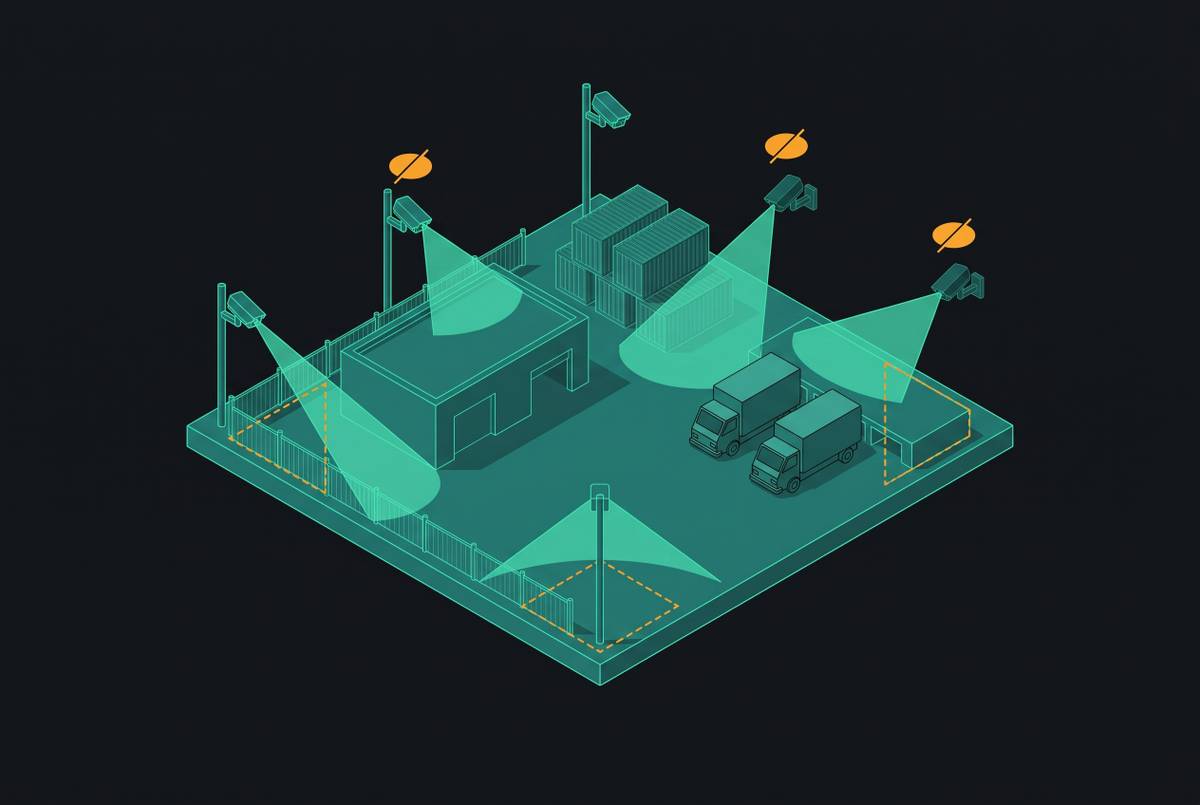
Video verification answers the question of what the camera sees. It cannot answer questions that fall outside the camera's view, the connection quality, or the operator's procedure. Camera placement is the binding constraint. An operator can only assess what is in frame. Cunningham Security illustrates this with a concrete example: a rear-door alarm at a shop with an interior camera showing someone entering and a distant camera showing nothing useful. "Both cameras can be working correctly, yet only one answers the immediate question." An empty camera view does not prove a false alarm. Activity may be outside the frame, behind an obstruction, or earlier than the available clip. If the image is dark, blocked, or unavailable, video cannot reliably answer the question, and the monitoring procedure must account for that gap rather than assume footage will always be available.
Even a clear view does not settle every question. A camera shows a person entering a closed business, but it cannot show if that person is an authorized employee or contractor.
Local policy, available resources, and reported circumstances all shape how an agency handles a verified event. Nor does video verification by itself remove false-alarm permit requirements, prevent fines, or qualify a property for insurance discounts. Those outcomes depend on local jurisdiction and insurer policy.
Why site-specific protocol is what actually determines whether either method works
Neither alarm verification nor video verification produces a useful outcome without a site-specific protocol telling the operator what to do with what they see. The quality of verification is bounded by the quality of the instructions behind it. The protocol is the decision tree. Guardian Advanced Solutions describes it as trained personnel reviewing the live scene, assessing whether activity is suspicious, and responding "according to the property's security plan, which can include live audio warnings, contacting designated keyholders, dispatching a guard service where available, or requesting police response for a confirmed crime in progress." Cunningham Security identifies the questions that define that plan: "What starts the event, who receives it, and what that person is authorized to do. Those answers are more useful than the label on the service."
What changes the call, a camera cannot resolve on its own. Guardian Advanced Solutions offers the construction-site scenario: movement after hours could be a scheduled delivery crew, an employee retrieving equipment, or someone cutting through a fence. "Those are very different events. Visual verification allows a trained operator to distinguish between authorized activity and a likely threat before escalating." Human operators provide the contextual judgment that no camera can: contacting administrators to confirm whether a specific individual is authorized, coordinating with facility managers about whether crews are working in a given area, and giving law enforcement situational detail rather than transmitting an alert. AI can reason about what it sees faster and at greater scale, but the definition of "authorized" at a given site on a given schedule still comes from the operator's understanding of that site. The real question is not "video verification or alarm verification" but what architecture routes each alarm to the right kind of judgment at the right speed.
Where AI-assisted monitoring fits in the verification architecture
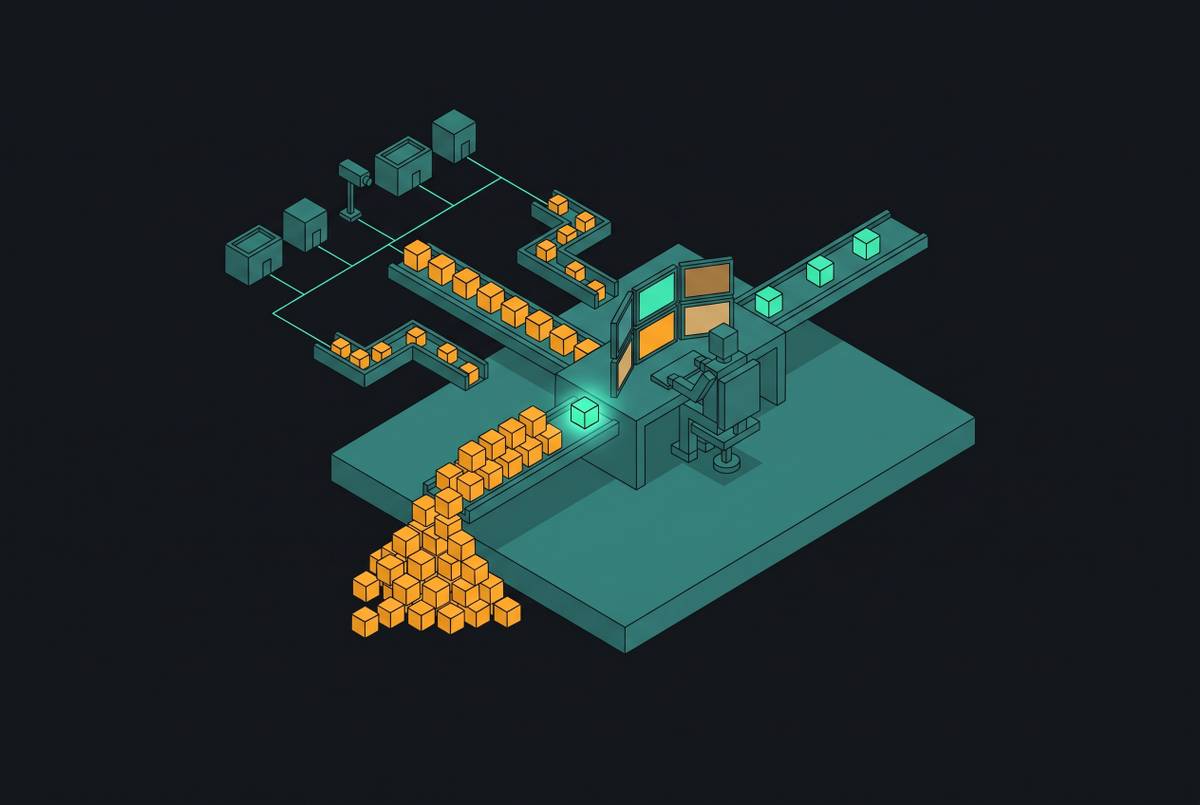
The practical failure of both alarm and video verification at scale is not the technology itself. It is the queue. Human operators cannot review every alarm at the moment it arrives when volume peaks, so real threats wait behind noise.
AI-assisted monitoring addresses this by classifying alarms before they reach a human operator, so environmental noise and authorized activity get separated from events that warrant human review. Rather than simple motion detection, AI can evaluate movement patterns to identify behaviors like loitering, erratic movements, and unauthorized access attempts, reducing the volume of events a human must assess. The architecture this produces is a two-layer system: AI handles the filtering at volume and speed, while trained human operators handle the judgment calls that require site context, authorized-party confirmation, and communication with responders. This is not AI replacing human verification. It is AI ensuring that when a human operator reviews an event, the queue in front of them contains only events worth their judgment, not environmental noise. The confusion between video and alarm verification reflects a deeper architectural problem in traditional monitoring: operators are forced to make judgment calls on incomplete information under time pressure. That is precisely why some modern monitoring services, Verdun among them, use AI agents to pre-filter alarms against video evidence before any human operator sees the alert, so verification is grounded in visual confirmation rather than sensor signals alone.
The emerging standards framework formalizes this layering. The ANSI/TMA-AVS-01-2024 standard prescribes alarm levels, Level 0 through Level 4, that characterize what evidence is required before a monitoring center communicates an event to an emergency communications center. The levels standardize how evidence quality maps to a defined alarm level, from raw unverified signals through audio, video, and analytical data.
How the method-to-use decision maps to property type and threat profile
The right verification architecture is not universal. It follows from what kind of threat is plausible, how much delay is acceptable, and what authorized activity looks like at a given site. Alarm verification without video is a reasonable fit for lower-risk, well-staffed, occupied properties where a keyholder can confirm quickly and false-alarm friction is manageable. It is not the right architecture where delay is costly or false-alarm volume is high. Video verification is the appropriate architecture for properties where a few minutes of uncertainty can produce significant loss. Guardian Advanced Solutions identifies these property types explicitly as places where "alarm-only security can leave gaps" because the response depends on a keyholder driving out or authorities determining priority from limited information. Construction sites hold equipment, fuel, copper, and materials that are difficult to replace quickly. Dealerships hold vehicle inventory and keys. Storage facilities have multiple access points and large, quiet overnight areas. Vacant commercial properties sit empty with no one to confirm a callback.
The binary choice between false alarms and delayed response is the defining constraint of alarm-only verification. That constraint persists because a single operator cannot review dozens of ambiguous sensor signals at once in real time. Services that combine AI video analysis with human operators, as Verdun does, can resolve that ambiguity at machine speed, filtering out environmental triggers and authorized activity before the alert queue reaches a human responder.
AI-augmented video verification fits multi-site operators and high-alarm-volume properties where a human-only model cannot keep up with peak volume. OnGuard Security Solutions maps the use cases: retail sites to confirm after-hours break-ins and reduce false motion triggers, warehouses to monitor large perimeters where false alarms are common, and construction sites to detect unauthorized entry or equipment tampering. Employee parking lots, truck yards, and industrial perimeters present the same profile: after-hours threat is real and the window to intervene is short. Central Monitoring Service notes that video verification "focuses on events that matter, providing clarity and immediate response to threats and risk." That is where volume-filtering earns its value.
Video verification shifts the operator's task from relay to judgment, but the time pressure stays the same. The difference is that when AI agents handle the initial scene analysis and dismiss routine activity, as in Verdun's monitoring model, human operators receive only the alerts that actually require human judgment. They spend attention on the verification that matters rather than triaging noise.
A buyer choosing an architecture should answer these questions before comparing services: what starts the event, a sensor, a camera analytic, or both; who receives it and what that person is authorized to do; whether the camera is positioned to actually answer the question the alarm raises; and whether the monitoring procedure accounts for missing or obscured footage. Cunningham Security frames these as the questions to ask before adding verification. They are the practical checklist, and they point away from feature comparisons toward the only question that ultimately matters: whether the architecture can deliver a verified judgment to the right person fast enough for that judgment to matter.